Charleston: The Southern Coastal City People Fall in Love With
Some cities impress you. Charleston lingers. This Charleston travel guide is about to show you exactly why.
Long after you’ve left, you find yourself replaying it in fragments — the pale wash of a Georgian facade at dusk, a garden gate left just ajar, the slow toll of a church bell carrying over the rooftops, an evening spent walking beneath live oaks so old they seem to lean in and listen. You remember the pace more than any single sight. Charleston has a way of slowing you down, and then, weeks later, making you wonder why the rest of your life doesn’t feel that way.
That is the thing about this small Southern city on the South Carolina coast. People don’t just visit Charleston. They fall for it. They come for a long weekend and leave already planning the next trip, or quietly pulling up real estate listings on the drive to the airport. Ask a dozen people what did it, and you’ll get a dozen answers — the food, the architecture, the manners, the light on the harbor. The truth is that no single thing explains Charleston. It’s the way all of it holds together, unhurried and intact, that gets under your skin.
This is our full Charleston travel guide, but it’s less a checklist than an attempt to answer a quieter question: why does everyone talk about Charleston the way they do? By the end, we hope you’ll understand — and see a few things worth carrying home.

What Makes Charleston So Special?
Founded in 1670, Charleston is one of the oldest cities in America, and it wears its age gracefully rather than heavily. The historic district alone holds more than 2,800 preserved buildings, which means you can walk for hours and rarely pass anything built to be forgotten. But what sets historic Charleston apart isn’t just that so much survived. It’s that the city decided, generations ago, that beauty was worth protecting — and then actually protected it.
A few things make the place feel different the moment you arrive.
History you can touch. Most cities keep their past behind glass. Charleston lets you live inside it. The house you’re staying in may be two centuries old. The restaurant may occupy a former merchant’s townhouse. The cobblestones underfoot were once ships’ ballast, carried across the Atlantic and left behind. There’s no separation between the historic city and the working one — they’re the same place.
A city built for walking. The peninsula is compact and flat, laid out long before cars, which means it still moves at a human scale. You can cross most of the historic district on foot in an afternoon, and you should. Charleston reveals itself slowly, in details you’d miss at any speed faster than a stroll — a hidden courtyard, a hand-forged gate, a garden spilling over a brick wall.
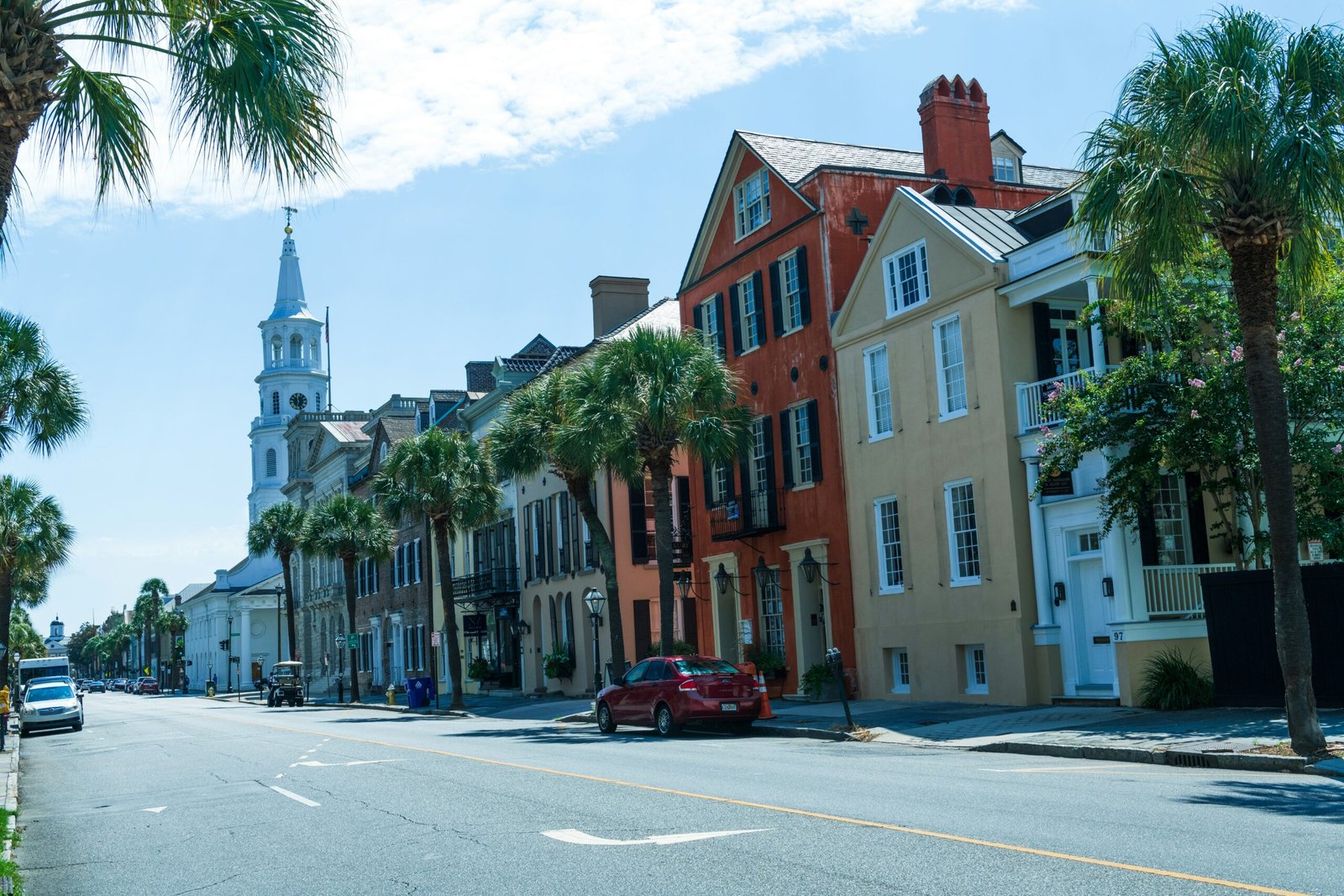
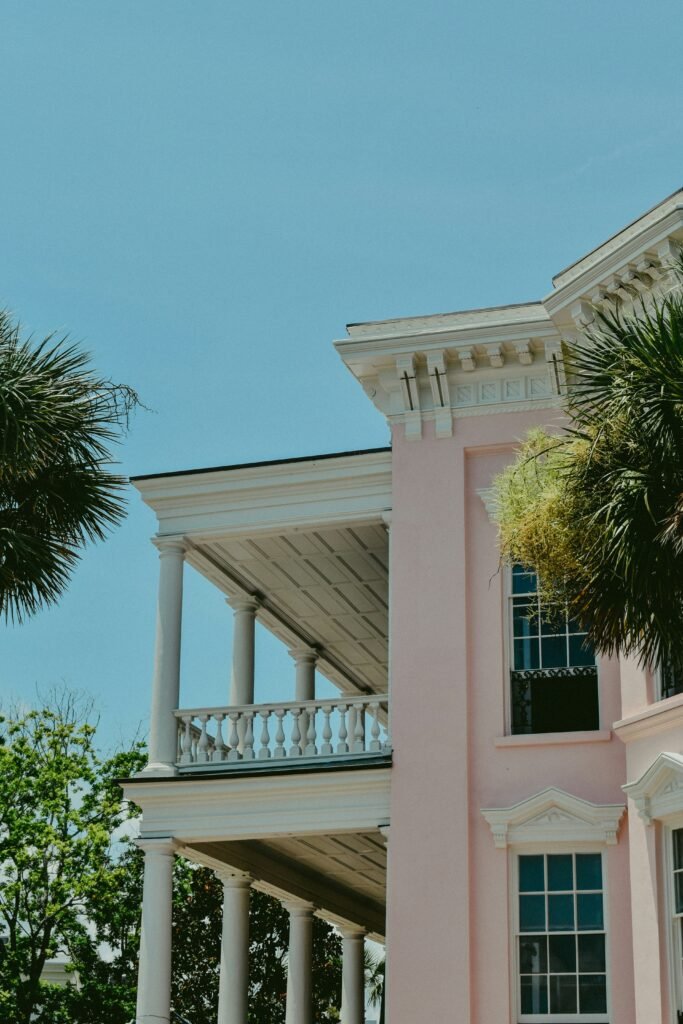
Architecture that feels timeless instead of trendy. There’s a coherence to Charleston that’s rare in American cities. Pastel stucco and warm brick, black shutters, iron balconies, tall windows, side porches catching the breeze. Nothing shouts. Everything belongs. Because so little was ever torn down and rebuilt to chase a trend, the city has a settled, of-a-piece beauty that never looks dated — a quality we’ll come back to, because it’s the key to bringing a little of this home.
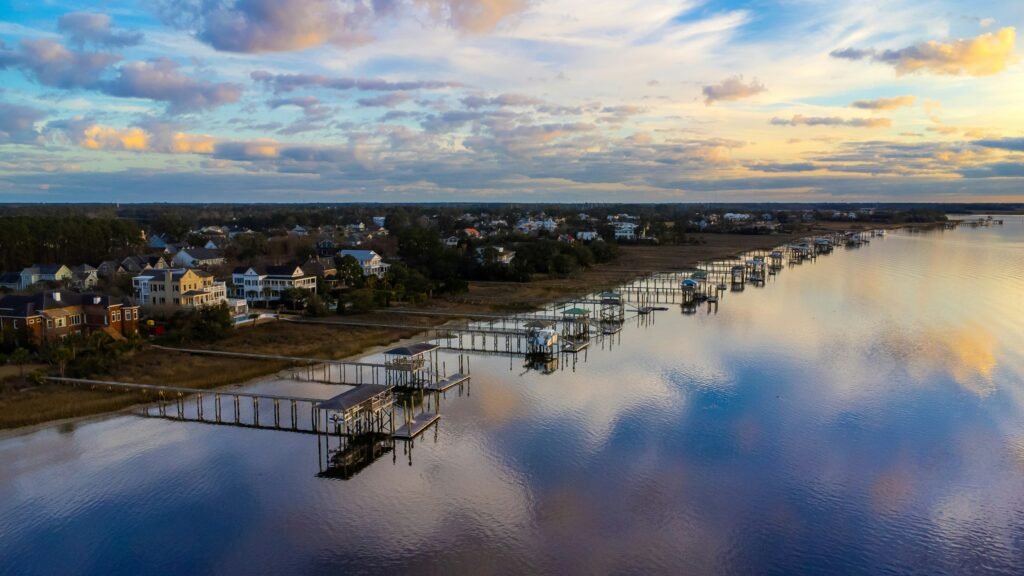
A city shaped by the water. Charleston sits where two rivers, the Ashley and the Cooper, meet the harbor and the Atlantic beyond. The water isn’t a backdrop here; it made the city and still runs through it — in the salt air, the shrimp on your plate, the sailboats off the Battery, the working docks, and the way the light comes off the harbor at the end of the day.
Hospitality that isn’t performance. Southern hospitality gets talked about so much it starts to sound like a slogan. In Charleston it reads as something simpler — a genuine unhurriedness with people. Shopkeepers chat. Strangers give directions and mean it. The whole city seems to operate on the belief that there’s no reason to rush a good conversation.
A food culture that punches far above its size. For a city this small, Charleston’s dining scene is astonishing, rooted in Lowcountry tradition and constantly reinventing itself. More on that below, too.
A pace worth borrowing. Underneath all of it is the quality that stays with you longest. Charleston is not in a hurry. It has learned, over 350 years, that a slower rhythm is not the same as a lesser one — and that lesson turns out to be the most valuable souvenir the city offers.
The Best Neighborhoods to Explore in Charleston
The historic district isn’t one place so much as a collection of distinct neighborhoods, each with its own character. You’ll want to wander freely, but it helps to know the general lay of the land. (We go deep on this in our full guide to the most beautiful neighborhoods in Charleston — coming soon; here’s the shape of it.)
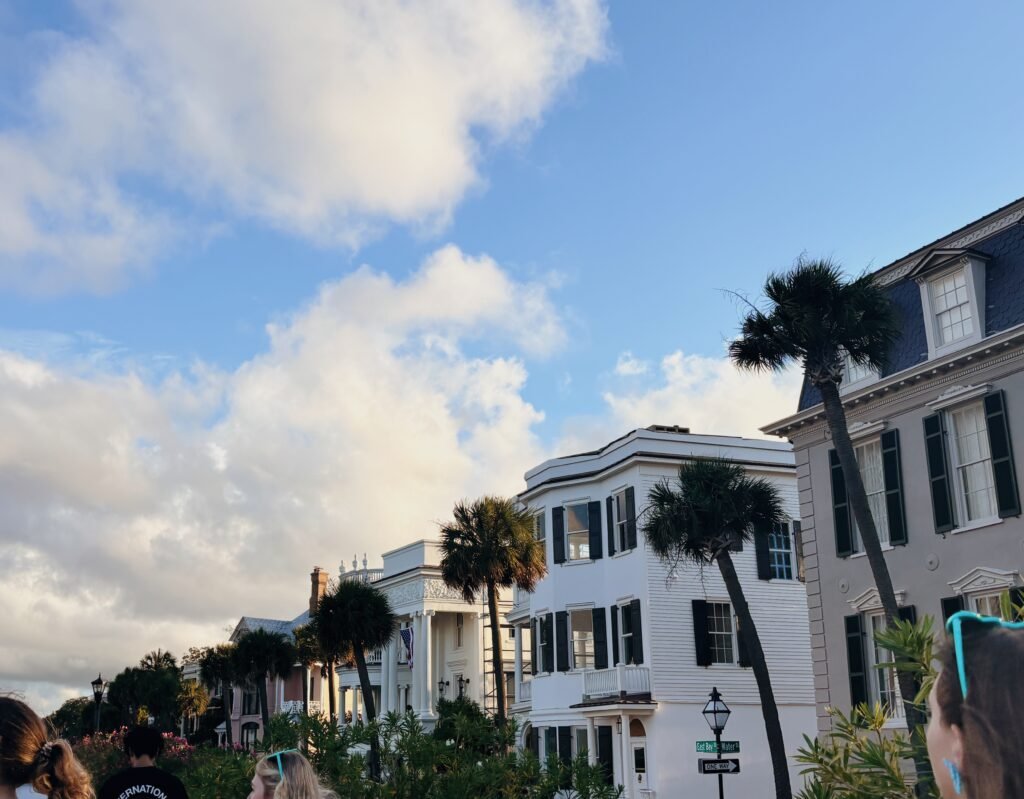
South of Broad is the postcard. South of Broad Street, the peninsula narrows toward the water and the houses grow grand — enormous antebellum mansions, private walled gardens, quiet streets that end at the harbor. It’s almost entirely residential, which means no shops and few restaurants, just pure, uninterrupted architecture. Come here to walk slowly and look up.
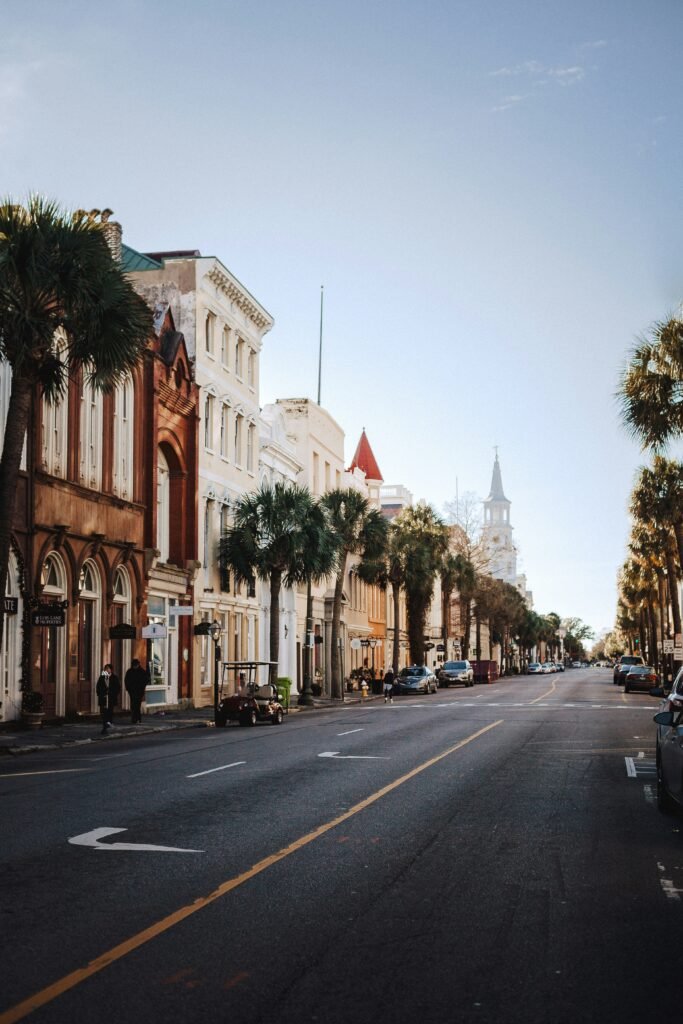
The French Quarter is the oldest and, to many, the most romantic corner of the city. Cobblestone lanes, gas lanterns, art galleries, and the steeple of St. Philip’s Church rising over it all. This is also home to the Dock Street Theatre, built on the site of the first structure in America designed for the stage.
King Street is where Charleston shops, eats, and gathers. It runs the length of the peninsula and unfolds in stretches — antiques toward Lower King, fashion and boutiques through the middle, and a lively run of restaurants and bars along Upper King. Hundreds of independent shops line it, and the architecture stays intact even where the retail is thoroughly modern.
The Battery and White Point Garden cap the very tip of the peninsula. The Battery is a seawall promenade with harbor views on one side and a row of stately mansions on the other; White Point Garden is the shaded park behind it, dotted with old cannons and oak-lined oyster-shell paths. Sunset here is a Charleston rite.
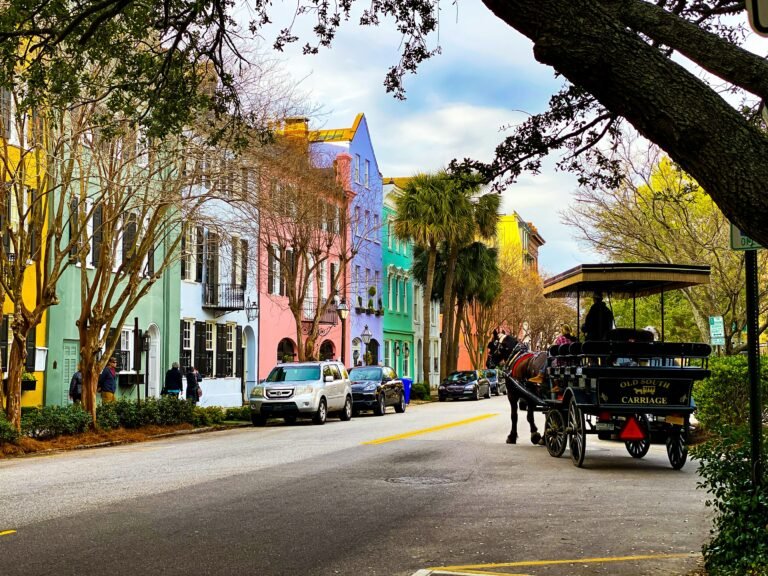
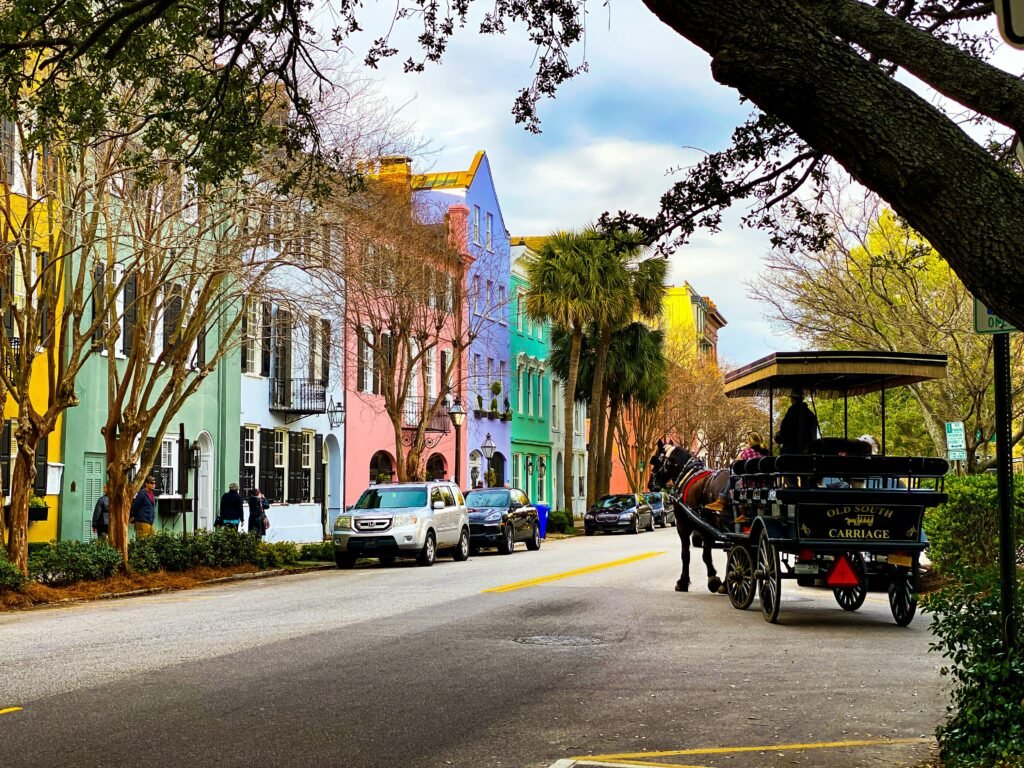
Rainbow Row is the single most photographed stretch in the city — thirteen pastel Georgian row houses along East Bay Street, the longest cluster of Georgian townhouses in the country. They weren’t always so colorful. A new owner named Dorothy Porcher Legge painted her section in cheerful hues in the 1930s, the neighbors followed, and an icon was born.
While these are the neighborhoods most first-time visitors gravitate toward, Charleston rewards wandering. Some of the city’s most memorable moments happen on the quiet streets between the landmarks — a garden glimpsed through an iron gate, a lane you didn’t mean to turn down, a porch swing swaying in the breeze with no one on it.
What Charleston Is Known For
If you’ve never been, a few images tend to define Charleston in the imagination — and for once, the clichés are earned.
- Historic homes, many open to tour, that preserve two centuries of craftsmanship down to the plaster and paint.
- Front porches and Charleston single houses — the city’s signature home form, turned sideways to the street so a long side porch can catch the breeze, and the reason so many facades feel intimate rather than imposing.
- Gas lanterns flickering beside front doors day and night, one of the city’s most beloved signatures.
- Wrought iron everywhere — gates, balconies, fences — much of it handmade, a craft Charleston elevated to an art form.
- Hidden courtyards and walled gardens, glimpsed through half-open gates, private worlds tucked behind the street.
- Churches, so many that Charleston earned the nickname the Holy City for a skyline of steeples that has guided ships into the harbor for generations.
- Lowcountry cuisine — shrimp and grits, she-crab soup, fresh seafood, and Southern cooking deeply influenced by Gullah Geechee traditions.
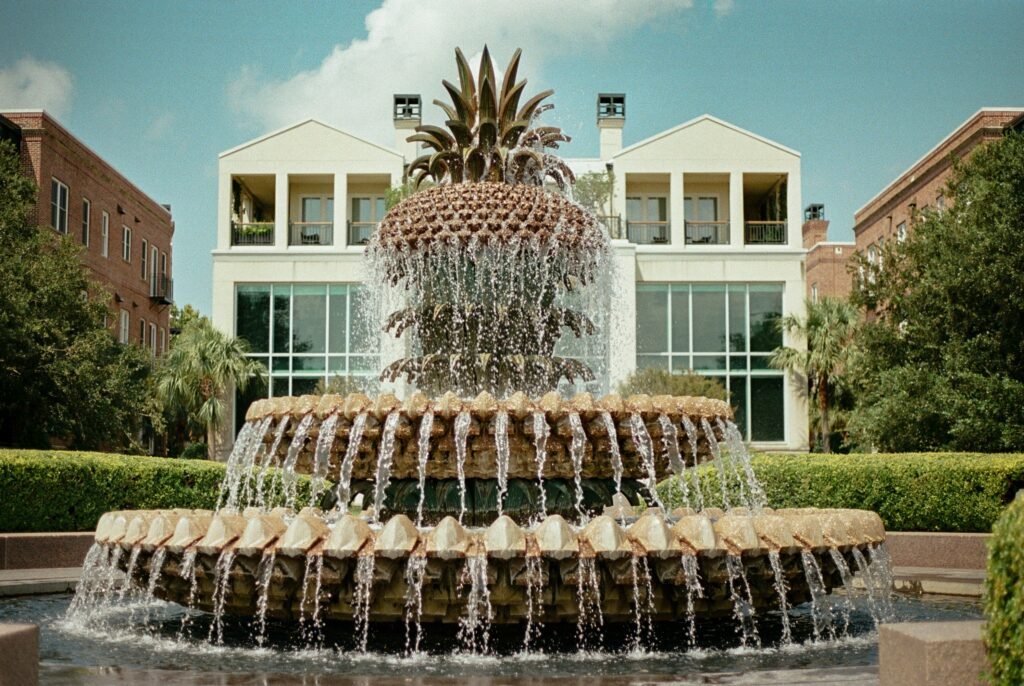
- Waterfront parks, none more iconic than Waterfront Park and its Pineapple Fountain, the pineapple being the old Southern symbol of welcome.
The Best Things to Do in Charleston
You could fill a week here without trying. But if you want the version of Charleston that explains why people love it, keep the list short and let it breathe. A few things not to miss:
Lose an afternoon on foot with no particular plan. This is the single best thing to do in Charleston, and it’s free. Start South of Broad, drift toward the Battery, wander back up through the French Quarter, and let yourself get a little lost. The city rewards it in a way no itinerary can — the best moments here tend to be the ones you didn’t schedule.
Step inside a home that has witnessed two centuries of American history. To understand Charleston, tour one of its house museums. The Nathaniel Russell House, built around 1808, is famous for a “flying” spiral staircase that rises three stories with no visible support. The Aiken-Rhett House is preserved almost exactly as it was found — faded, unrestored, and unforgettable — offering a rare, honest look at the full household, including the spaces where enslaved people lived and worked. The Edmondston-Alston House stands on the High Battery with harbor views the original owners would still recognize. Each tells a different piece of the story.
Claim a porch swing facing the harbor and let the light change. At Waterfront Park, the Pineapple Fountain gets the photos, but the porch swings looking out over the water are the real reward. Come late in the afternoon, when the sun drops behind the peninsula and the harbor turns gold, and stay longer than you meant to.
Browse a marketplace that’s been trading for more than two centuries. The City Market, established in the 1790s, runs several blocks through the heart of downtown. It’s where you’ll find local crafts, art, and the famous Gullah sweetgrass baskets — one of the oldest African craft traditions in America, still woven by hand right in front of you.
See the city the way it was meant to be seen — from the water. A harbor cruise reframes Charleston entirely. Sail past Fort Sumter, the island fort where the Civil War began in April 1861, glide beneath the Ravenel Bridge, and take in the low, steeple-punctuated skyline. Dolphins in the harbor are a frequent bonus.
Give yourself over to the restaurant scene. Dining is not a footnote in Charleston; for many visitors it’s the main event. Whether you plan around it or simply follow your appetite, eating well here is effortless.
A note on the food
Charleston helped write the modern American dining story, and it keeps rewriting it. FIG, open since 2003, is often credited with sparking the city’s culinary renaissance with its ingredient-driven, seasonal menu. Husk turned a strict rule — if it doesn’t come from the South, it doesn’t come through the door — into some of the most celebrated Southern cooking in the country, served inside a restored Queen Street mansion. Chez Nous offers the opposite kind of thrill: a tiny European-inspired room with a handwritten menu of just two starters, two mains, and two desserts, changed every single day. Around them orbit oyster bars, biscuit counters, and neighborhood spots serving Lowcountry classics that have anchored the city for decades.
Two practical truths worth knowing: the best tables book up well ahead, so reserve early for the marquee names, and a number of local favorites don’t take reservations at all — you simply show up when they open, or wait. Either way, you won’t eat a bad meal in this city.
Charleston Travel Guide: When to Visit Charleston
Charleston is a year-round destination, but the season you choose will shape the trip. Here’s the honest version.
Spring (March–May) is Charleston at its most beautiful — and its most crowded. The gardens explode into bloom, camellias and azaleas giving way to wisteria, dogwood, and magnolia, and the city’s biggest festivals fill the calendar. It’s the peak season for good reason, which also makes it the priciest. Book early.
Fall (September–November) may be the sweet spot. The summer humidity finally breaks, the light softens, and the crowds thin from their spring peak. Locals will tell you that mid-October through November is the loveliest stretch of the whole year — warm afternoons, cool evenings, and the city at an easy, unhurried pace.
Summer (June–August) is hot and humid, with highs in the upper 80s and 90s and frequent afternoon thunderstorms; it also overlaps hurricane season. But rooms can be cheaper, the beaches (Folly, Sullivan’s Island, Isle of Palms) are minutes away, and if you plan sightseeing for the cooler mornings, summer has its rewards.
Winter (December–February) is Charleston’s quietest and most affordable season. Days are mild and often sunny, the crowds all but disappear, and December brings a genuinely magical run of holiday decorations, markets, and lights. For a peaceful, atmospheric trip, don’t overlook it.
A few of the events worth planning around: Charleston Wine + Food each March, the Festival of Houses and Gardens in spring, Spoleto Festival USA in late May, and the MOJA Arts Festival in early fall. (Festival dates shift year to year — treat any specific date as a snapshot and confirm before you book.)
Where to Stay
Charleston’s lodging is part of the experience — many of the best places to stay are historic in their own right. Rather than name specific hotels, here’s how to match the kind of stay to the kind of traveler you are.
Choose a boutique hotel if you care more about atmosphere than amenities. Charleston does the small, design-led hotel exceptionally well — intimate properties, often in restored buildings, where the details are the whole point. This is where the city’s aesthetic sensibility shows up in your own room. Ideal for design lovers and couples.
Choose a luxury hotel if you want everything in one place. For full-service polish — spas, notable restaurants, rooftop bars, a concierge who can land the hard reservation — the historic district holds several grand hotels within walking distance of everything. Best for special occasions and travelers who like to unwind without leaving the building.
Choose a historic inn if you want to sleep inside the story. For the most immersive stay, book a restored inn or a converted mansion downtown. Falling asleep in a two-hundred-year-old house — creaking heart-pine floors, a piazza off your room — changes the whole trip. Perfect for first-timers who want Charleston to feel like Charleston from the moment they check in.
Choose a waterfront or island stay if you want breeze over bustle. If you’d rather trade the downtown energy for salt air, the surrounding islands and waterfront properties put you minutes from the historic district with the harbor or the beach at your door. Well suited to families and longer, slower stays.
Wherever you land, staying in or near the historic district is worth it. Charleston is a walking city, and the closer you are to its heart, the more of it you’ll absorb.
Charleston’s Design Influence
Here’s where Charleston stops being a place you visit and starts being a place you borrow from.
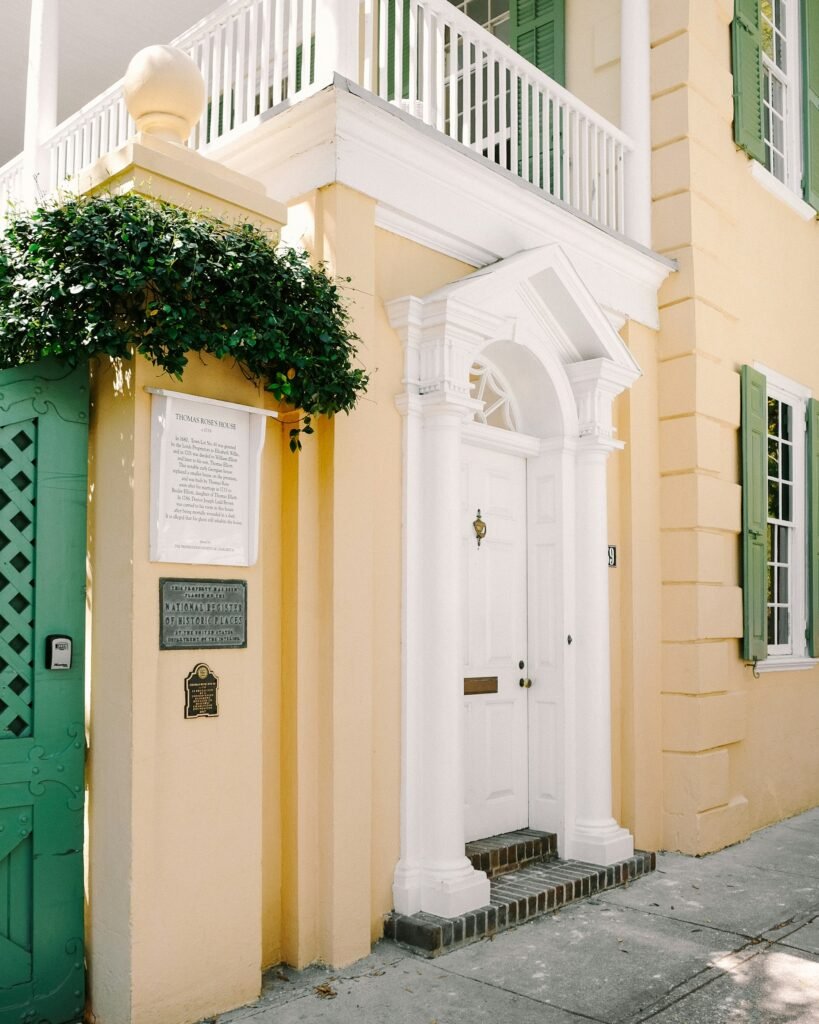
Spend a few days here and you begin to notice the vocabulary — the specific, repeated details that make a Charleston street unmistakably itself. The piazza, that long side porch turned to catch the prevailing breeze, a solution to the heat that became a way of life. Black shutters framing tall windows. Gas lanterns by the door. Wrought iron gates and balconies, much of it handmade by generations of local smiths. Window boxes softening the brick. Walled courtyards that turn a small lot into a private garden. A restraint and symmetry to the whole that reads as calm even when the colors are bold.
None of it is accidental, and almost all of it is learnable. You don’t need a historic mansion to bring these ideas home — a lantern by the door, a considered shutter color, a gate that frames a view, a garden wall that makes a small space feel like a retreat. This is the deeper reason Charleston stays with people: it’s not just beautiful to look at, it’s instructive. It quietly teaches you how a home can feel.
We take this apart in detail in The Design Language of Charleston Homes — coming soon — where we translate the city’s architecture into ideas you can actually use, whatever and wherever your home is.
Is Charleston Worth Visiting?
Honestly? For the right traveler, few places are more worth it — but it helps to know what Charleston is and isn’t.
If you’re chasing beaches alone, there are easier, sandier destinations. If you want big-city nightlife, there are livelier places to find it. Charleston isn’t trying to be either of those things.
But if you want walkable streets lined with two centuries of preserved architecture, one of the best food scenes in the country, deep and complicated American history, and one of the most beautiful urban environments in the United States — all at a pace that actually lets you enjoy it — Charleston is very hard to beat. It’s the kind of place that turns first-time visitors into repeat ones, and repeat visitors into people quietly wondering what it would take to live there.
For most travelers, three or four days is enough to fall for it. Very few people leave wishing they’d gone somewhere else.
Why Charleston Leaves Such an Impression
It would be easy to end a Charleston guide the way so many do — there’s something here for everyone. But that misses what actually happens to people in this city.
Charleston reminds us that beauty isn’t always dramatic. It rarely announces itself. More often it lives in the rhythm of a place that has learned to slow down, preserve what matters, and treat everyday moments — a morning walk, a long dinner, an hour on a porch swing facing the water — as worth doing well. The city’s greatest lesson isn’t architectural at all. It’s a way of paying attention.
That’s why people fall in love with Charleston, and why so many of them go home a little changed. You don’t need to move here to keep what it gives you. You can borrow the pace, the attention, the small rituals, the belief that where you spend your daily life is worth making beautiful. Whether you come for a single weekend or simply carry a few of its ideas back to your own front door, Charleston offers more than a memorable trip.
It offers a quiet argument for how we might all live a little more intentionally — which, in the end, is the whole reason we go looking for beautiful places at all.
Frequently Asked Questions
The details below can change season to season — treat them as a snapshot and confirm current specifics before your trip.
What is the best time to visit Charleston?
Spring (March–May) and fall (September–November) offer the most comfortable weather. Spring brings blooming gardens and the biggest festivals but the largest crowds and highest prices; fall — especially mid-October through November — is warm, calmer, and many locals’ favorite. Winter is the quietest and most affordable, and summer is hot and humid but close to the beaches.
Is Charleston worth visiting?
For travelers who love architecture, history, walkable cities, and exceptional food, yes — emphatically. It’s less suited to those looking purely for beaches or big-city nightlife. Most visitors find three to four days more than justify the trip.
How many days do you need in Charleston?
Three to four days is ideal for a first visit — enough to wander the historic district, tour a home or two, take a harbor cruise, and eat well without rushing. A long weekend works beautifully; a full week lets you add the nearby beaches and islands.
Is Charleston walkable?
Very. The historic district is compact and flat, and walking is by far the best way to experience it. Comfortable shoes matter — many streets are original cobblestone or uneven brick.
Do you need a car in Charleston?
Not for the historic district, where walking and short rideshares cover almost everything. A car is useful only if you plan to visit the outer beaches, islands, or plantations. Downtown parking is limited, so garages are your friend.
What food is Charleston known for?
Lowcountry cuisine — shrimp and grits, she-crab soup, and seafood shaped by Gullah Geechee tradition — alongside one of the most acclaimed fine-dining scenes in the country. Reserve the marquee restaurants well ahead; several beloved local spots are walk-in only.
Why is Charleston called the Holy City?
For its skyline of church steeples, long a landmark for ships approaching the harbor, and its historic reputation for religious tolerance. The nickname has stuck for centuries.
Keep Exploring
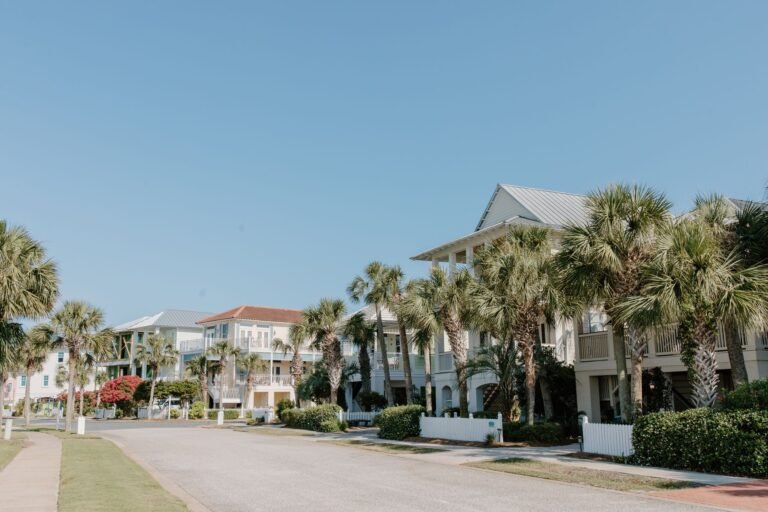
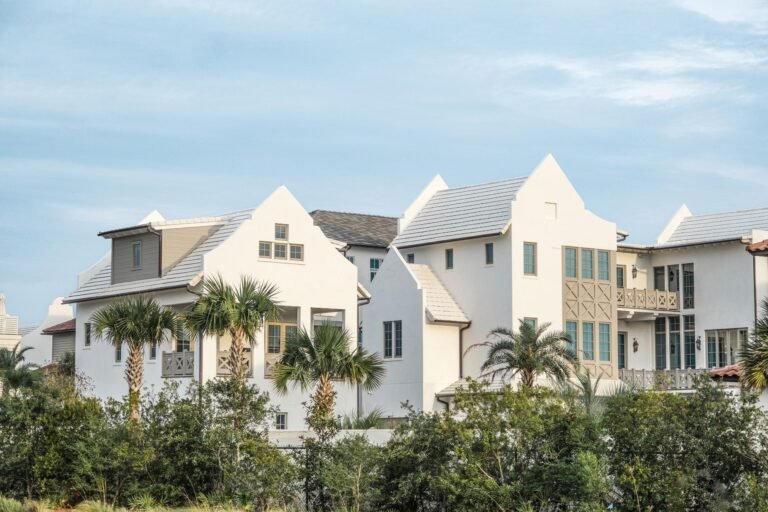
Charleston is one stop in a larger conversation we love having here at Between Pines & Tides — about the places that move us, and what we can bring home from them. If Charleston’s coastal calm speaks to you, you’ll feel right at home along Florida’s 30A: start with our 30A travel guide, then compare the towns in Rosemary Beach vs. Seaside vs. Alys Beach and see why 30A has become so beloved. For the design thread that runs through all of it, what makes 30A beach houses feel so different and how to bring the feeling of 30A home are the natural next reads.
And this is only the beginning of our Charleston review — with guides to the city’s most beautiful neighborhoods, a Charleston-versus-Savannah comparison, the design language of its homes, and what Charleston gets right about everyday living all on the way.
Before you go: join the Between Pines & Tides letter for slow, beautiful dispatches on the places we love and the lives we build around them — including first word when the rest of the Charleston review goes live.