What Makes 30A Beach Houses Feel So Different?
Almost everyone who visits 30A notices it before they can name it. The houses feel different. It’s one reason 30A beach house design has become so recognizable.
They are bright without feeling cold. Elegant without feeling formal. Expensive-looking without ever feeling flashy.
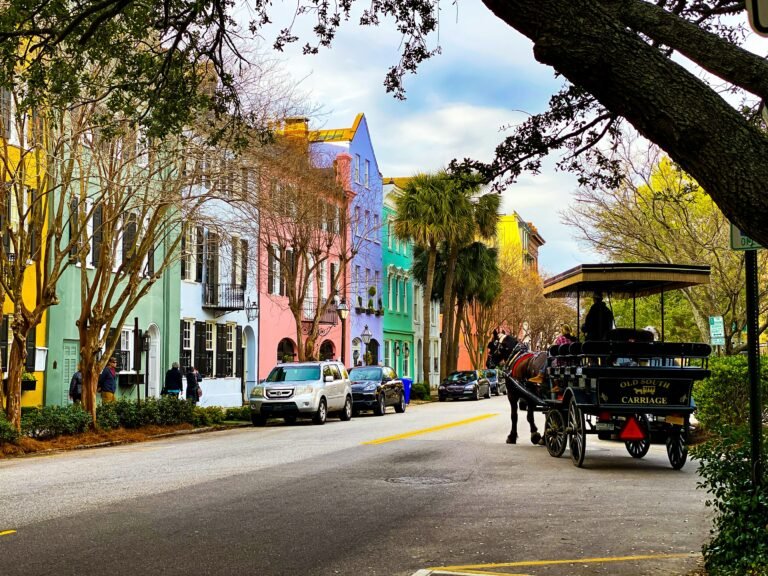
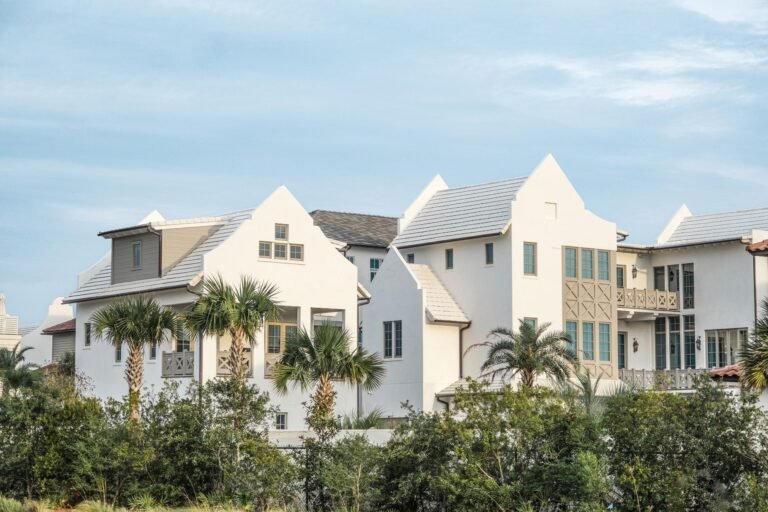
Walk through the white archways of Alys Beach, down the tree-lined lanes of Rosemary Beach, or past the pastel cottages of Seaside, and you sense a consistency that is hard to describe and impossible to miss. Up close, the towns look nothing alike. Yet they share a feeling.
So what is it? What actually makes a 30A beach house design feel the way it does — and how do you bring some of that home, even if you live nowhere near the Gulf?
The short answer is that these homes were designed for a feeling, not for square footage. Everything else follows from that.
1. Architecture Built for Outdoor Living
The first thing a 30A house design does is blur the line between inside and out. The architecture treats the outdoors as another set of rooms, not as a view to look at through glass.
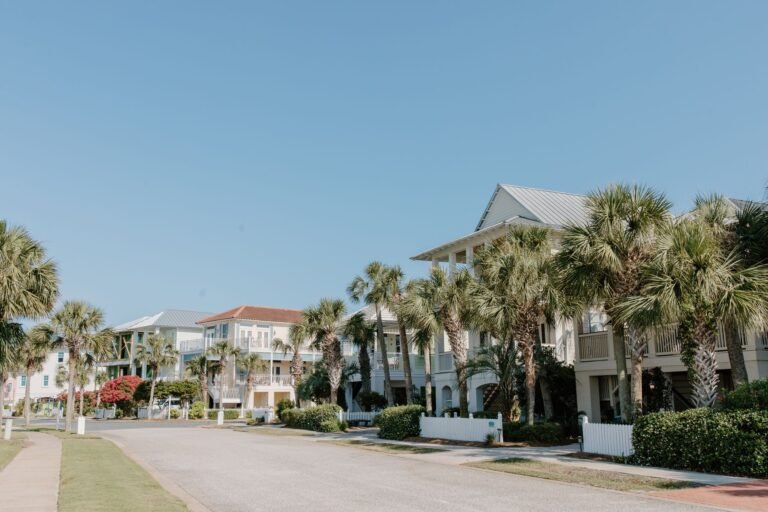
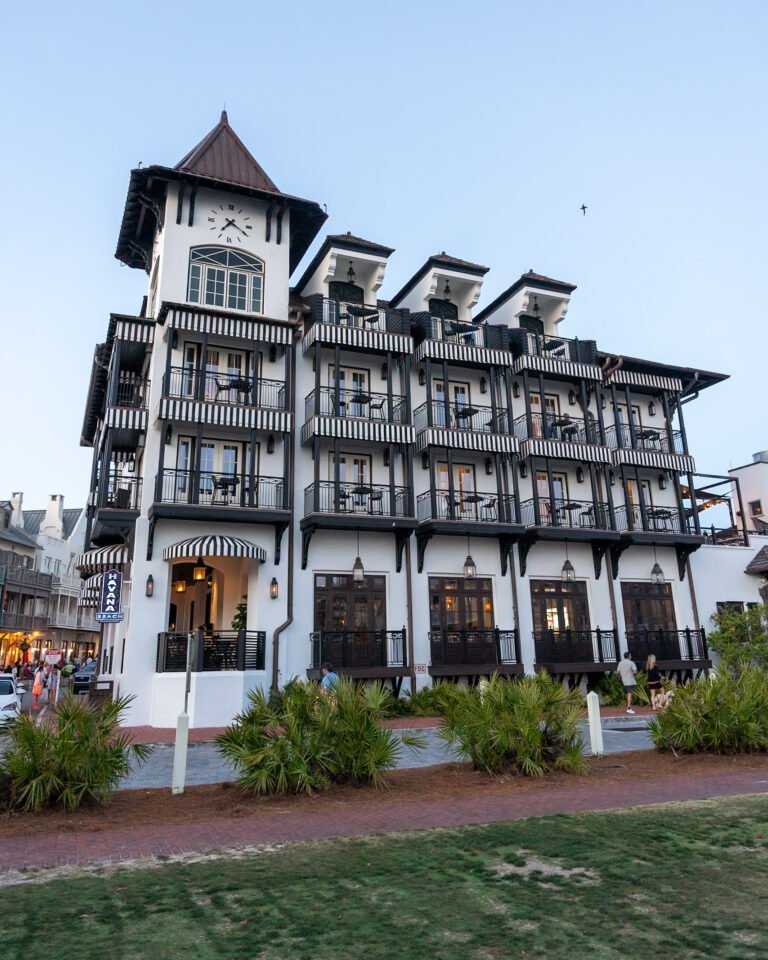
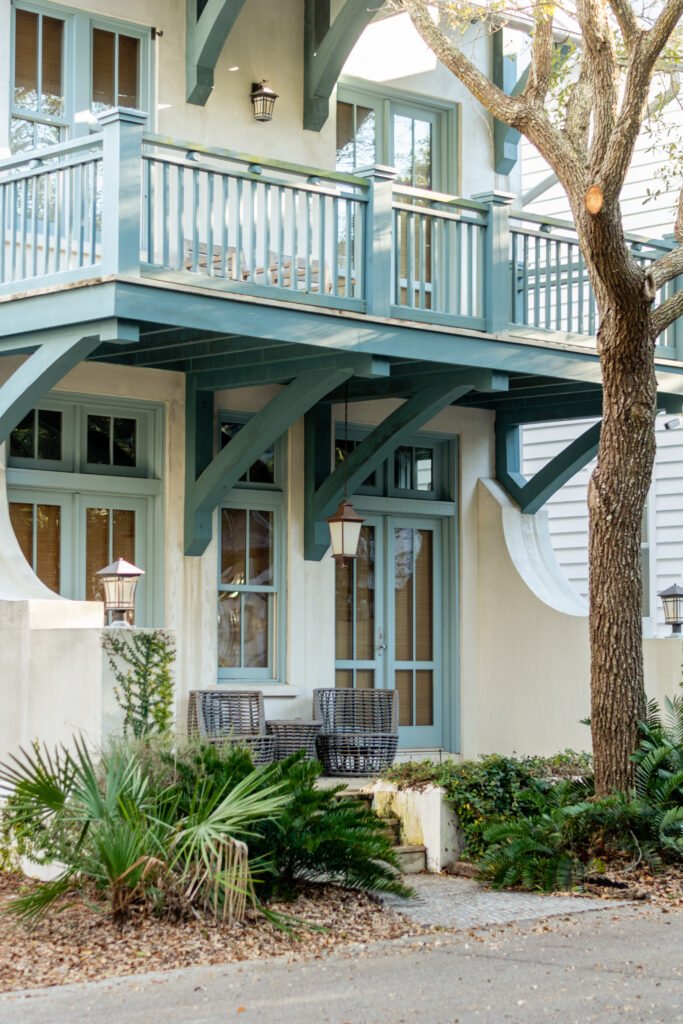
In Alys Beach, you enter many homes through a zaguán — a covered passage that leads from the street into a private courtyard with a fountain or small pool at its center. Loggias frame the court, so the transition from indoors to outdoors is gradual rather than abrupt. In Rosemary Beach, homes sit on an elevated masonry base, with deep porches that work as a second living room and catch the breeze coming off the water. In Seaside, the deep front porch is practically a requirement of the town code.
The details repeat from town to town: covered outdoor rooms, courtyards, outdoor showers, balconies, folding doors, and streets short enough to walk. The effect is that life flows between inside and outside without anyone deciding to make it happen.
These homes weren’t designed in isolation, either. They’re part of communities where the architecture, streets, parks, and public spaces were all planned together — the New Urbanism that shaped the entire corridor. That shared planning is part of what makes 30A architecture feel so cohesive, even when no two houses look alike.
2. The Color Palette Is Surprisingly Quiet
One hallmark of 30A beach house design is its restrained color palette. People expect a beach house to be loud — navy and white, coral, an anchor on the wall. 30A goes the other way. The palette is built from the colors already outside the window.
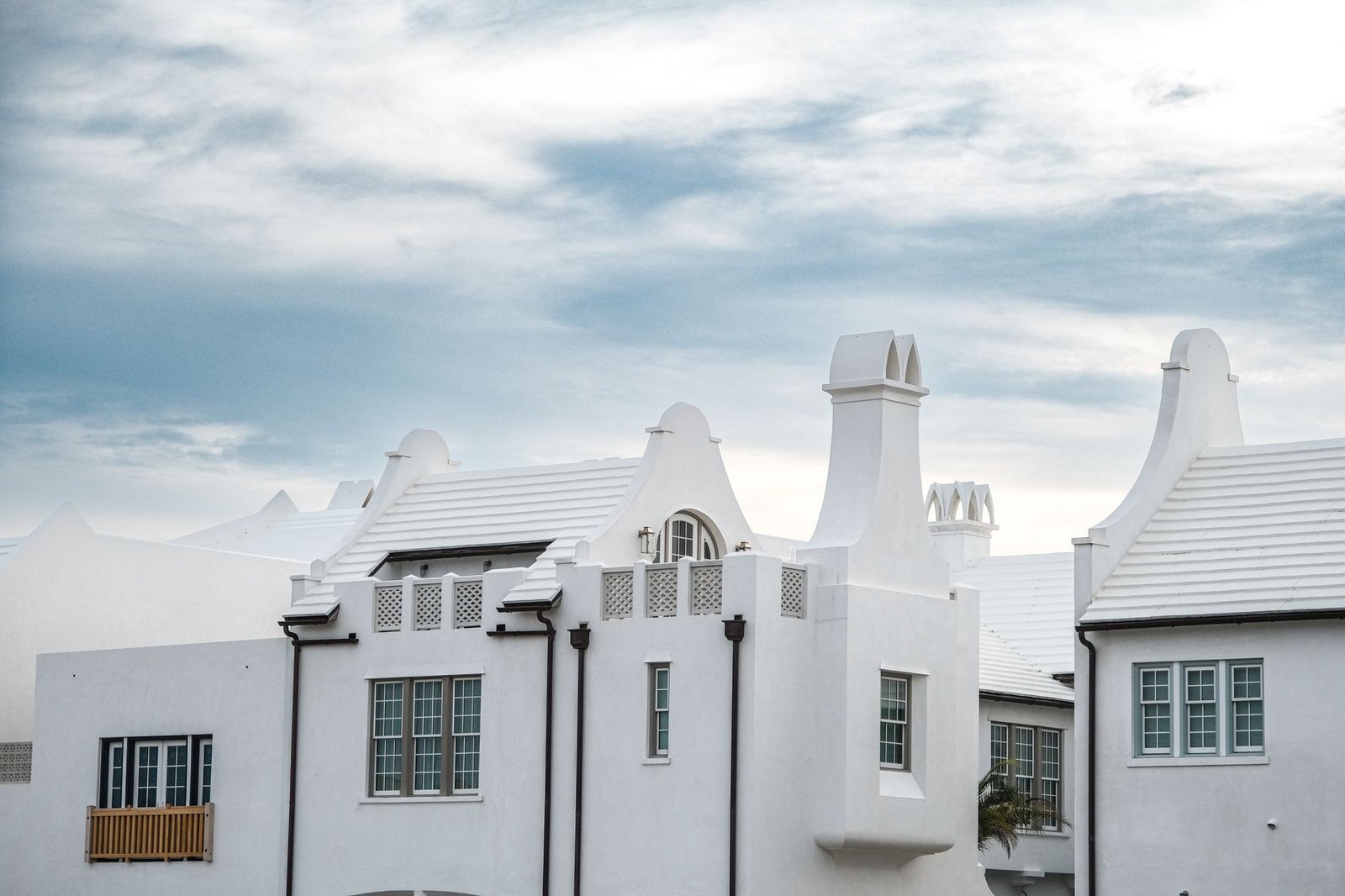
The working range: warm whites, creams, sand, driftwood, soft gray, and pale oak. Even Rosemary Beach, which chose a deliberately deeper and more European palette than its neighbors, stays warm and earthy rather than bright. Alys Beach takes the idea to its extreme, with an entire town of white stucco.
The point is the same across all of them. The colors mirror the beach instead of competing with it, allowing the landscape — not the décor — to become the focal point. Nothing shouts. The house becomes a calm backdrop, and the light, the water, and the people inside it become the color.
3. Natural Materials, Everywhere
Pick up almost any surface in a 30A home and it came from something that grows, weathers, or was quarried. Synthetic shine is rare.
- White oak, for floors and millwork
- Limestone and shell stone, including the shell walkways throughout Alys Beach
- Plaster walls, soft and slightly imperfect
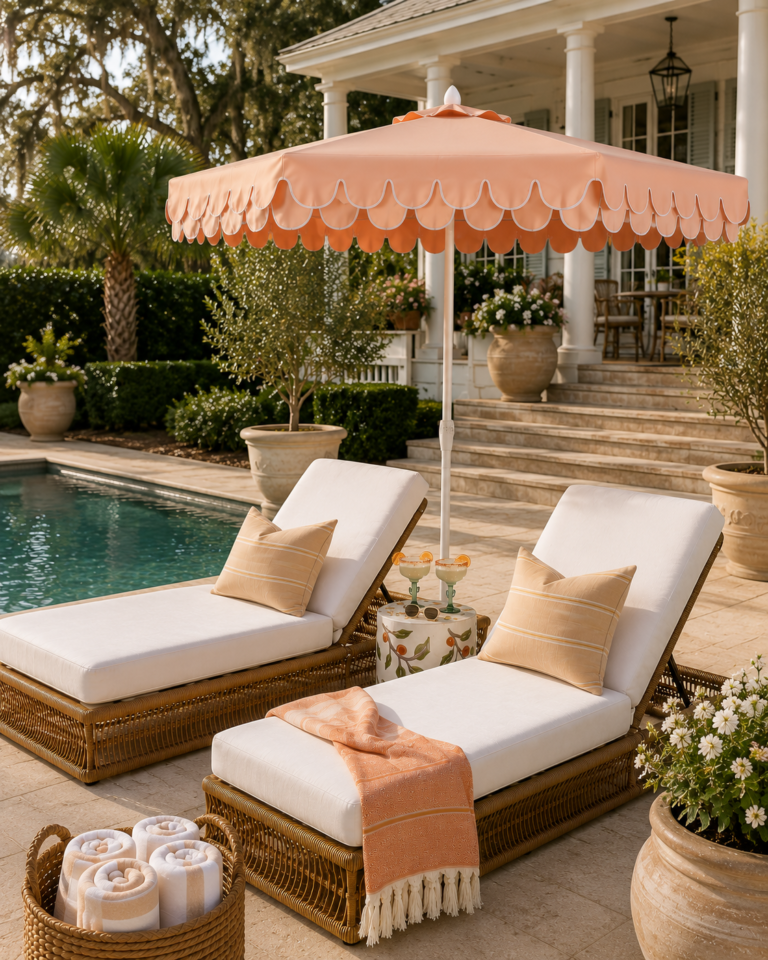
- Linen, rattan, and woven textures
- Reclaimed and natural wood
These materials share one quality: they age into something better. Rosemary Beach’s design code openly favors finishes that patina rather than simply wear out. A linen slipcover softens. Plaster catches light differently as the day moves. Wood deepens. The house looks like it has been loved, because the materials are designed to record being lived in.
4. Light Is Treated Like a Design Element
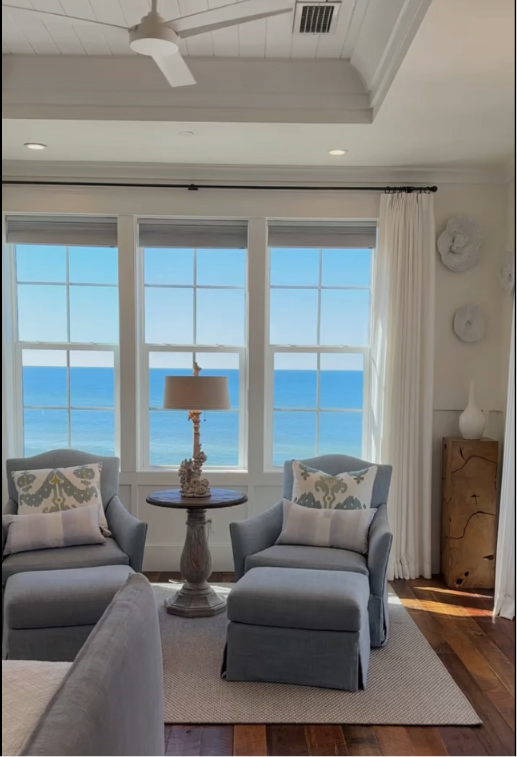
In a 30A house, daylight is not an accident of where the windows happen to be. It is the thing the architecture is built around.
Windows are oversized. Ceilings run high, which helps both the light and the air. Alys Beach homes use operable clerestory windows to pull daylight and ventilation deep into rooms that would otherwise stay dark. Seaside cottages were drawn with large windows and natural cross-ventilation from the start. Curtains, when they exist, are sheer — there to soften the light, never to block it.
Stand in one of these rooms at midday and the brightness feels effortless. It isn’t. The architecture was designed to celebrate daylight, and it does most of its work before you ever turn on a lamp.
These homes aren’t memorable because they’re larger than every other beach house. They’re memorable because they know exactly what to leave out.
The calm you feel isn’t accidental — it’s the result of thoughtful restraint in everything from the architecture to the furnishings.
5. Interiors Feel Collected, Not Decorated
A 30A interior almost never looks like it was bought in a single afternoon. There is no matching furniture set, no showroom completeness.
Instead: a vintage chair beside a modern sofa, handmade pottery, woven baskets, layered textures, a piece of art that clearly meant something to someone, and books that look read rather than styled. The rooms feel collected over time — gathered, not delivered.
This is the hardest quality to fake and the most important to understand. A collected room has range. It has a few things that don’t obviously go together and somehow do. That tension is what makes it feel like a home instead of a listing.
6. Every Room Encourages Gathering
Walk through enough of these homes and a pattern appears: the floor plan is quietly engineered for people to end up in the same place.
- Oversized kitchens with islands big enough to lean on
- Breakfast nooks that hold more people than they should
- Long outdoor dining tables under cover
- Multiple small seating areas instead of one formal living room
Nothing here is about square footage for its own sake. The rooms are scaled to togetherness. The house is built on the assumption that the best parts of a vacation happen when everyone drifts toward the same table — and then it makes that easy to do.
7. Landscaping Is Part of the Architecture
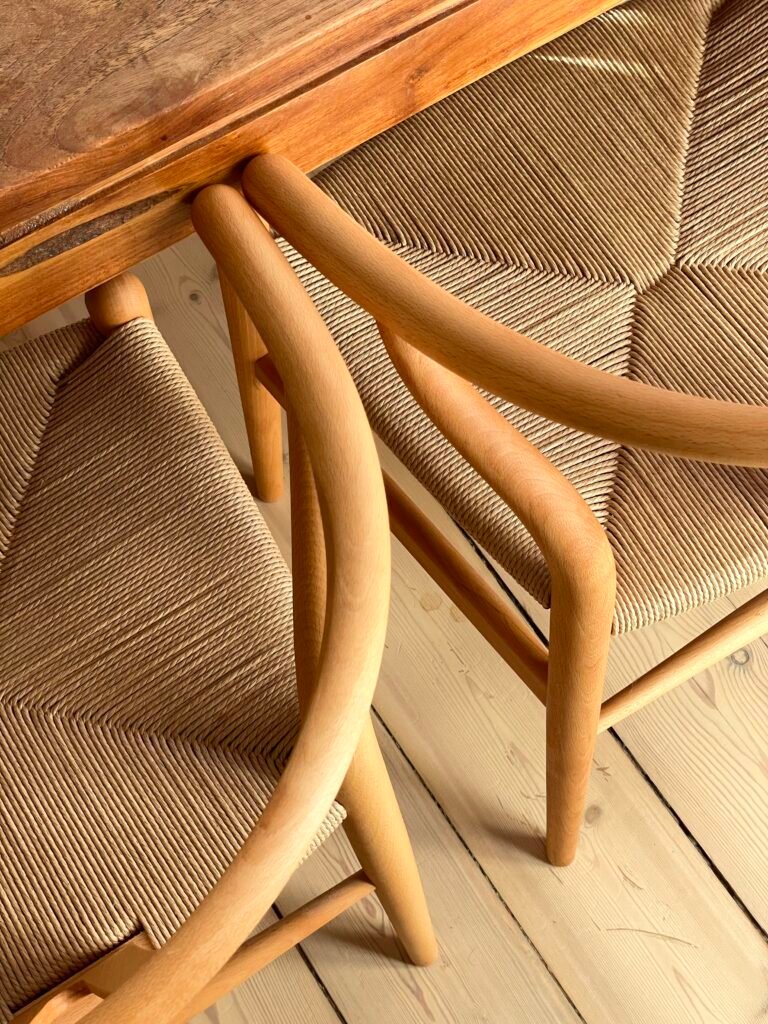
On 30A, the planting is not an afterthought added once the house is finished. It is drawn at the same time as the walls.
Sea oats, palms, olive trees, and native grasses soften hard edges. Brick paths and shell walkways connect homes to courtyards to greens. At night, low outdoor lighting does the rest. Alys Beach goes furthest, with a town landscape designer plotting flora — down to herb gardens residents can pick from — and pocket parks set between the homes.
The result is that the architecture never feels dropped onto the lot. The landscape holds it. House and ground read as one composition.
8. The Luxury Comes From Simplicity
This is the section worth slowing down for, because it explains everything above it.
Luxury on 30A is not what people usually picture. It is not gold fixtures, oversized chandeliers, or the most expensive finish in every room. The most admired town on the entire corridor, Alys Beach, describes its own architecture as a study in geometry — light and shadow across clean white forms, rather than busy materials or color.
What luxury looks like here instead: space. Calm. Craftsmanship you only notice if you look. Restraint. Materials chosen to last decades rather than seasons.
Subtract, and what remains has to be good. That is the whole secret. These homes feel expensive because so little is competing for your attention, and the few things that remain are done well. Restraint reads as wealth because restraint is the hardest thing to pull off.
9. Craftsmanship Is Meant to Last
Perhaps more than anything else, thoughtful craftsmanship defines 30A beach house design. Look closely and the 30A difference goes deeper than style. These houses don’t just look expensive — they feel substantial.
The substance comes from how they’re built: custom millwork instead of stock trim, built-ins fitted to the room, hand-troweled plaster, handmade tile, solid-wood doors with real weight, and hardware that feels good in the hand. None of it announces itself. You notice it the way you notice a well-made coat — not by the label, but by how it holds.
It’s also why the best beach house interiors on 30A age so gracefully. Real joinery and natural materials don’t date the way fast finishes do. That’s the quiet line between a house that photographs well and one that still feels good to stand in ten years later — and it’s a hallmark of modern coastal design done properly.
How to Bring the Feeling Home
You do not need a house on the Gulf to borrow how these homes feel. Almost none of it depends on the beach. Start here:
- Swap bright white bulbs for warm ones. This single change does more than any purchase.
- Hang linen curtains — sheer enough to keep the light.
- Choose natural fibers: wool, jute, cotton, rattan over synthetics.
- Declutter, then declutter again. Empty space is the look.
- Use fewer, better accessories instead of many small ones.
- Add woven texture — a basket, a tray, a seagrass rug.
- Open the windows. Let in air and outside sound.
- Bring in oversized greenery; one large plant beats five small ones.
- Paint walls a warm white rather than a cool, blue-white.
- Create one outdoor sitting area, however small, and actually use it.
Pick two or three. The 30A feeling is cumulative, not instant, and it rewards restraint at home exactly the way it does on the coast.
The Real Reason These Homes Stay With You
The reason 30A homes stay in your memory isn’t that they’re bigger or more expensive than what you have at home. Plenty of larger, pricier Florida beach homes are forgotten the moment you leave them.
It’s that they were designed to create a feeling. They slow you down. They invite people in. They blur the line between indoors and out, and they make the case — quietly, in white oak and warm light — that beauty comes more from restraint than from excess.
It’s also one reason people don’t just remember 30A — they start imagining what it would feel like to live there. That’s the same pull that has made it one of America’s most coveted beach destinations.
The best 30A beach house design isn’t about trends – it’s about creating a feeling. That’s a lesson worth bringing home, no matter where home is.
Frequently Asked Questions
What is 30A beach house style called?
There isn’t one single name, because 30A is several design languages sharing a coastline. Seaside is coastal vernacular — pastel wood-frame cottages with porches and tin roofs. Alys Beach is Bermudan and Mediterranean — white stucco, courtyards, and clean geometry. Rosemary Beach draws on the Dutch West Indies, New Orleans, and St. Augustine, with deeper colors and elevated porches. What unites them is New Urbanist planning and a restrained, natural palette.
What colors are 30A beach houses?
Mostly warm whites, creams, sand, driftwood, soft gray, and pale oak. Alys Beach is almost entirely white. Seaside leans into soft pastels. Rosemary Beach uses a deeper, warmer, more European range. Across all of them, the colors echo the beach rather than compete with it.
Are 30A homes Mediterranean style?
Some are. Alys Beach blends Bermudan architecture with Mediterranean and Moorish details, which is why it can read as Mediterranean. Seaside and Rosemary Beach are not — they pull from coastal cottage and Caribbean-colonial traditions instead. 30A is a mix, not a single style.
How do I get the 30A look in my own home?
Start with light and materials, not furniture. Warm bulbs, linen curtains, natural fibers, plenty of empty space, and a few well-made pieces will get you most of the way — anywhere in the country. Our full walk-through is coming in How to Bring the Feeling of 30A Home.
Love timeless coastal home? Get thoughtful stories on beautiful places, design inspiration, and intentional living delivered to your inbox. No spam – just ideas worth slowing down for.
Keep Reading: The 30A Series
- 30A Florida: The Coastal Towns That Feel Like a Permanent Vacation — the full guide
- Rosemary Beach vs Seaside vs Alys Beach — how the three flagship towns differ
- Why 30A Has Become One of America’s Most Coveted Beach Destinations
- How to Bring the Feeling of 30A Home — the room-by-room playbook