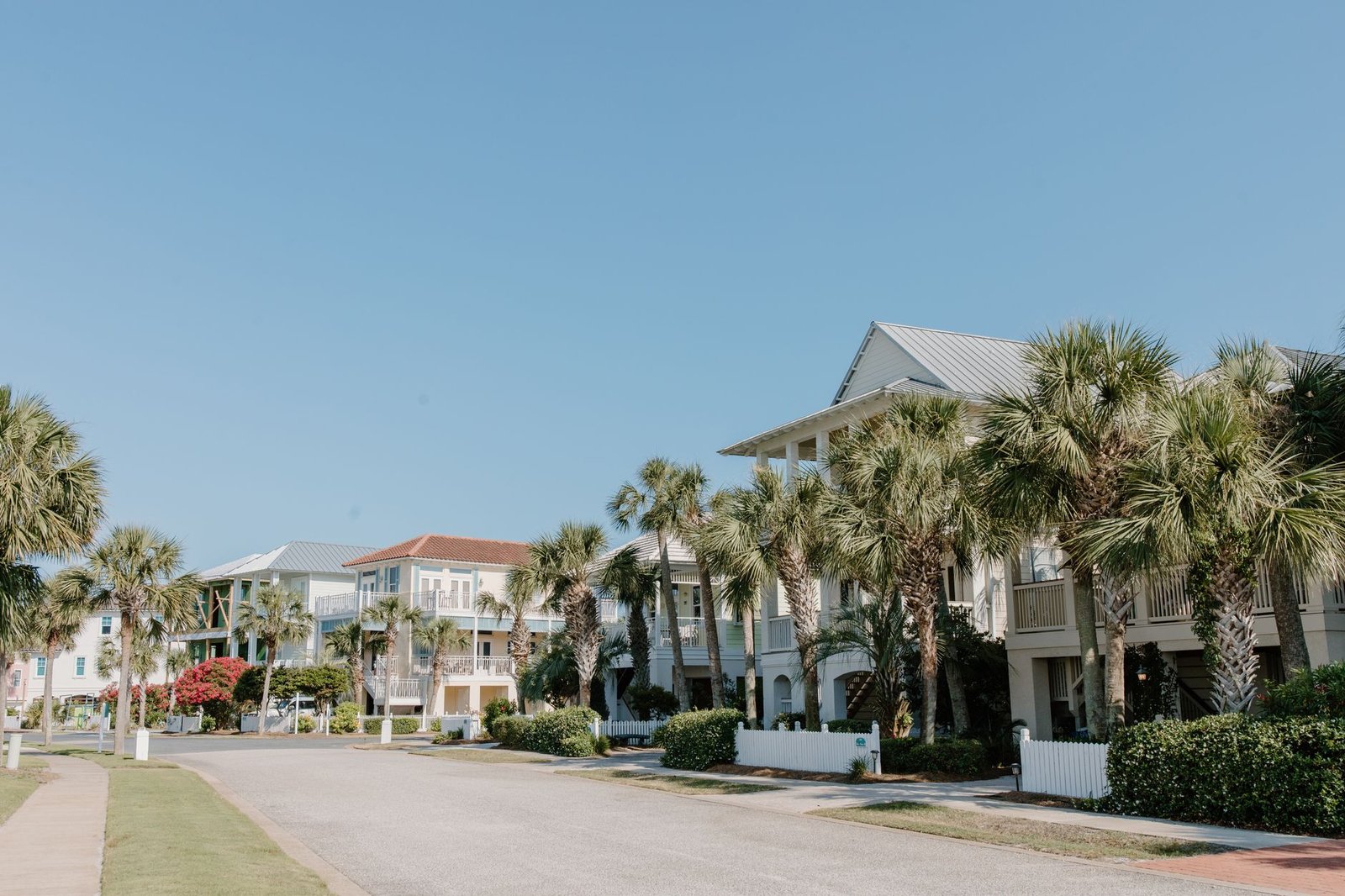
How to Bring the Feeling of 30A Home
You can’t literally bring the feeling of 30A home, but you can bring much of what makes it so restorative into your own everyday life. The light, the materials, and the slow rhythms that make the Florida coast feel restorative — and how to live with them wherever you are.
In This Article
- What People Really Fall in Love With on 30A
- Design Your Home Around Light
- Bring the Outdoors In
- Create Spaces That Invite Gathering
- Slow Down Your Weekends
- Choose Quality Over Quantity
- Let Your Home Tell the Story of Places You Love
- The Real Lesson 30A Teaches
- Bringing It Home
- Frequently Asked Questions
There’s a particular quiet that settles in on the drive home from 30A. The cooler is empty, there’s sand in the floor mats, and somewhere into the second hour you catch yourself trying to hold onto something you can’t quite name.
It isn’t the beach. Not really. Sand and saltwater exist in a hundred places. What you’re reaching for is harder to pack: the slower mornings, the walk to coffee instead of the drive, the way afternoon light moved across the floor, the dinner that ran long because no one had anywhere else to be.
This is the part most people misread about wanting to go back. The ache isn’t geographic. It’s a longing for a particular way of living — and the genuinely useful news is that almost none of it depends on the Gulf.
I notice it in myself every time. For the first week after I get home from 30A, I open the windows a little more than usual, let the morning coffee go cold while I sit with it, and catch myself wondering why ordinary life can’t feel a bit more like that. It took me a while to understand that it could — that what I was missing wasn’t the place so much as the way I’d let myself live while I was there.
You can’t bring 30A home. But you can bring the feeling of it. After four guides to this stretch of the Florida Panhandle — its towns, its architecture, its peculiar magnetism — this is the one that matters most, because it’s the one you can actually use. Here’s how, wherever you happen to live.
What People Really Fall in Love With on 30A
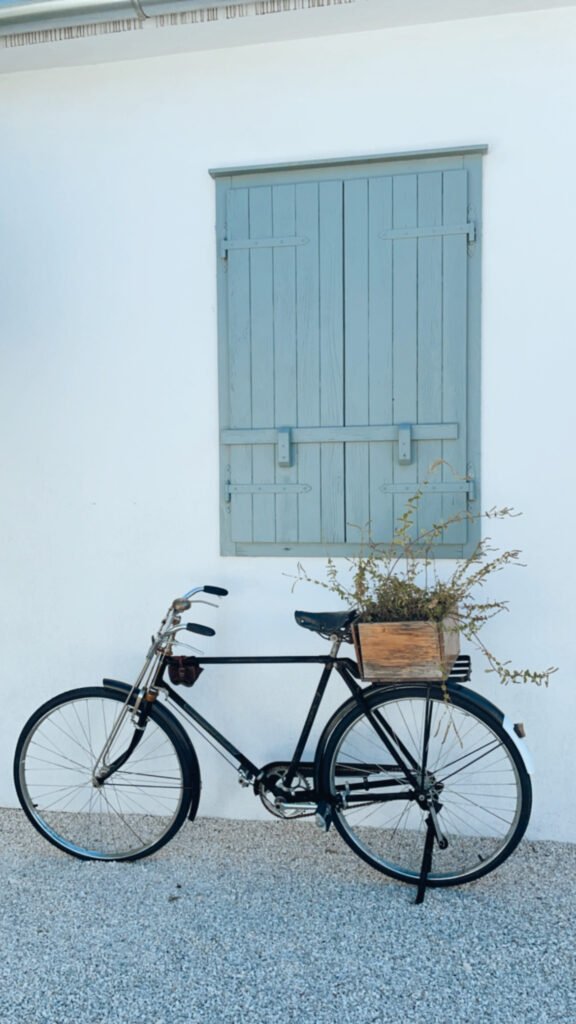
Ask ten people what they love about 30A and most begin with the obvious: the sugar-white sand, the famously clear, almost improbable green of the water. Both are real. Neither is the reason anyone gets a little wistful on the drive north.
What people actually fall for is atmosphere — the cumulative effect of a hundred small decisions about how a place should feel to live in. We traced the design of it in What Makes 30A Beach Houses Feel So Different and the deeper forces behind it in Why 30A Has Become One of America’s Most Coveted Beach Destinations. But it’s worth naming the ingredients plainly, because every one of them can be recreated somewhere else.
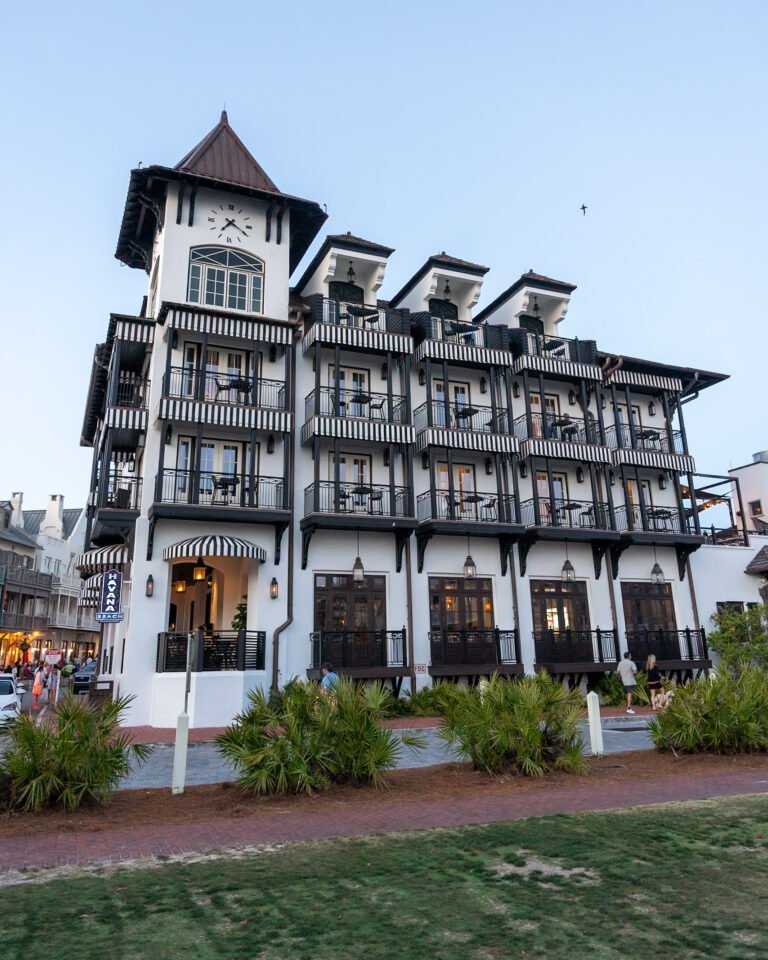
There’s the pace, first of all — unhurried by design rather than by accident. There’s walkability: towns like Seaside and Rosemary Beach were planned so the post office, the coffee, the bookshop, and your friends are a short stroll apart, not a drive. (Seaside is widely credited as the birthplace of New Urbanism, the planning movement built around exactly that idea.) There’s the architecture — low, light, and porch-forward, designed to push you outside rather than seal you in. There’s the natural beauty, of course. And underneath all of it, a kind of intentional simplicity: the sense that someone decided what mattered here and left the rest out. Put together, those are what people really mean when they talk about the 30A lifestyle.
None of those are beach-specific. Pace, walkability, light, outdoor living, restraint — these are choices, not coordinates. Which means the feeling you’re chasing isn’t trapped on a thirty-mile stretch of coastline. It’s a set of principles you can carry into a suburban ranch, a city apartment, or a mountain cabin. The rest of this guide is simply those principles, translated for everyday life.
Design Your Home Around Light
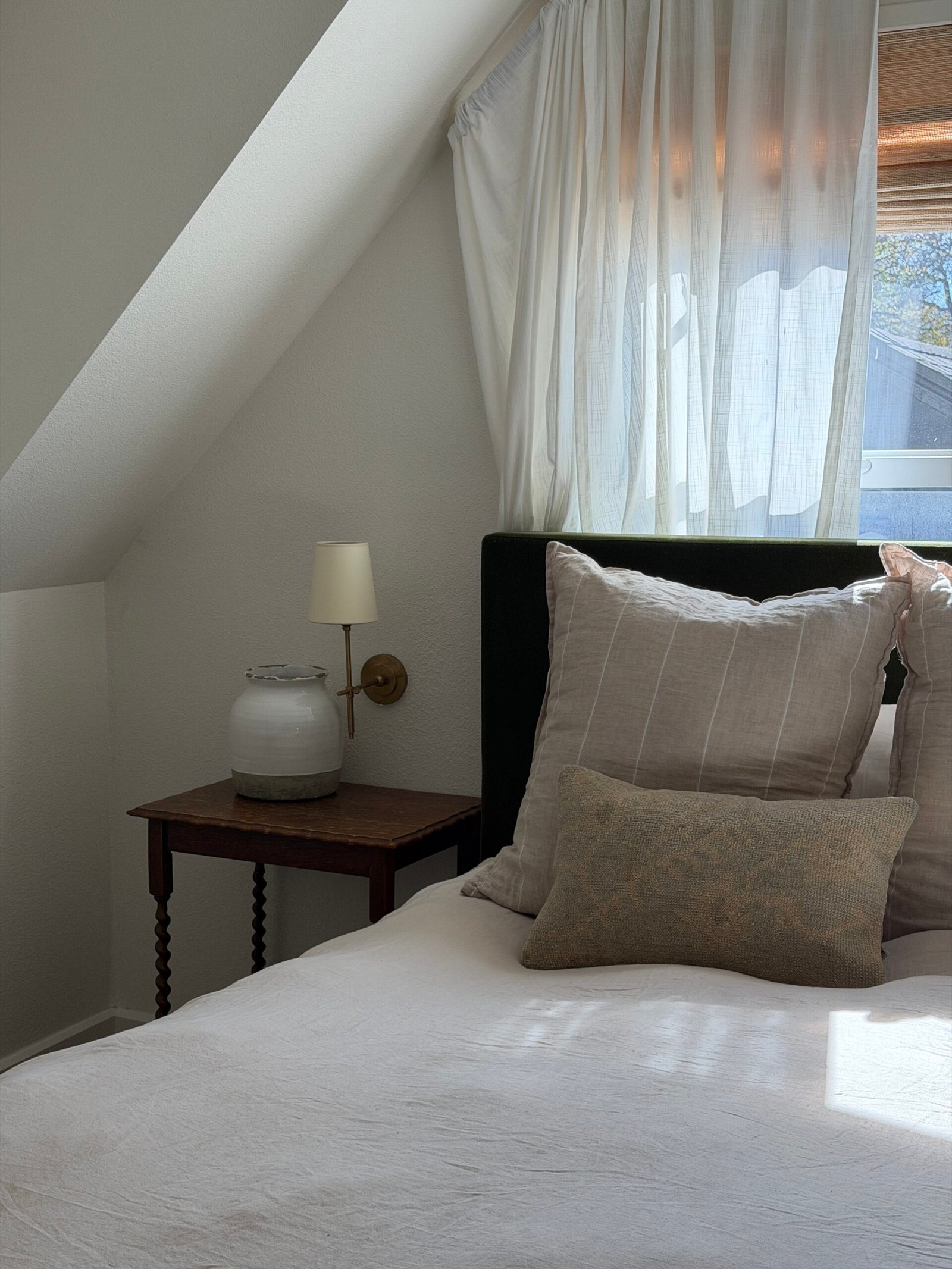
The first thing most people notice inside a 30A home — before they could tell you why — is that it feels light. Not bright in a harsh way. Luminous. Calm. As though the room is exhaling.
That feeling is mostly the absence of things. These interiors rarely feel heavy because they aren’t asked to carry much: pale walls, bare or barely-dressed windows, a few well-chosen pieces, and as much daylight as the architecture can gather. You don’t need a Gulf view to borrow the effect.
Start by treating natural light as your most valuable material, and stop blocking it. Heavy drapery, dark accent walls, and furniture crowded against windows all quietly drain a room. Swap weighty curtains for unlined linen or simple sheers that move with the air and soften the light instead of stopping it. Where privacy allows, leave some windows undressed entirely.
Lighten the palette next. The 30A aesthetic leans on warm whites, soft oats, and the muted blues and greens of sea and sky — colors that reflect light rather than absorb it. You don’t have to repaint the whole house to feel the shift; even moving to a warmer white in one main room changes how the morning feels in it. Then borrow light you don’t technically have: a mirror placed across from a window nearly doubles the daylight in a room, and clearing surfaces does something similar, because visual clutter reads to the eye as a kind of darkness. A calm room is a room you can see all the way across.
Bring the Outdoors In
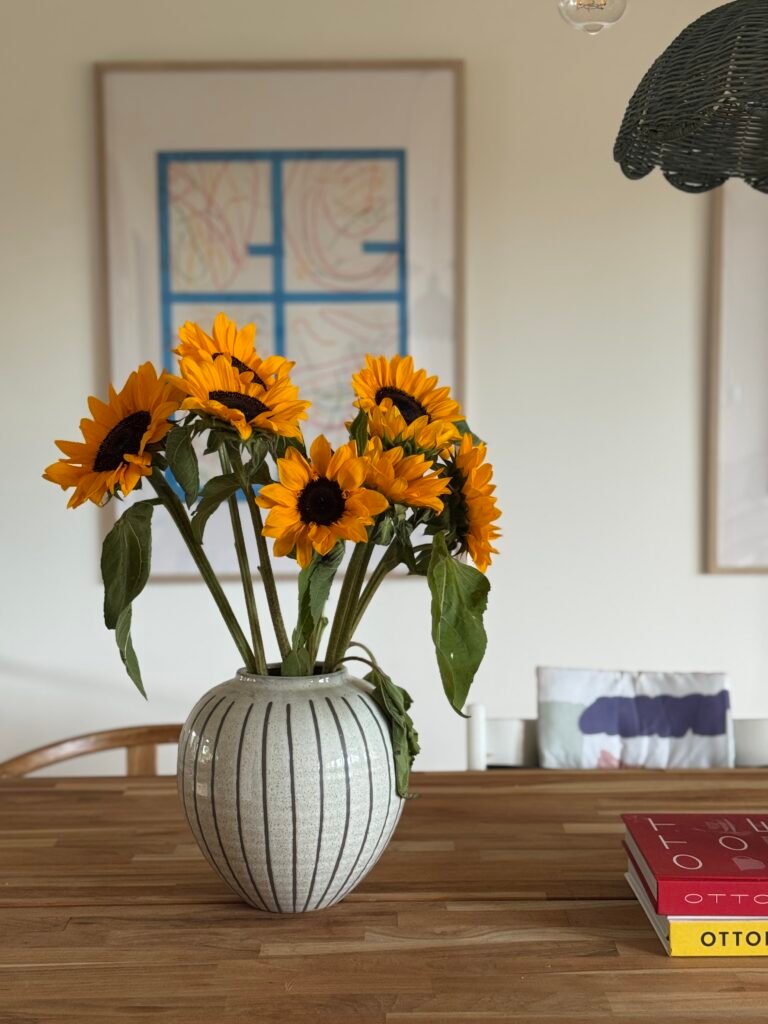
For all their polish, 30A homes never feel sealed off from the world outside. The line between indoors and out stays deliberately blurry — and that blur is a large part of why they feel so alive.
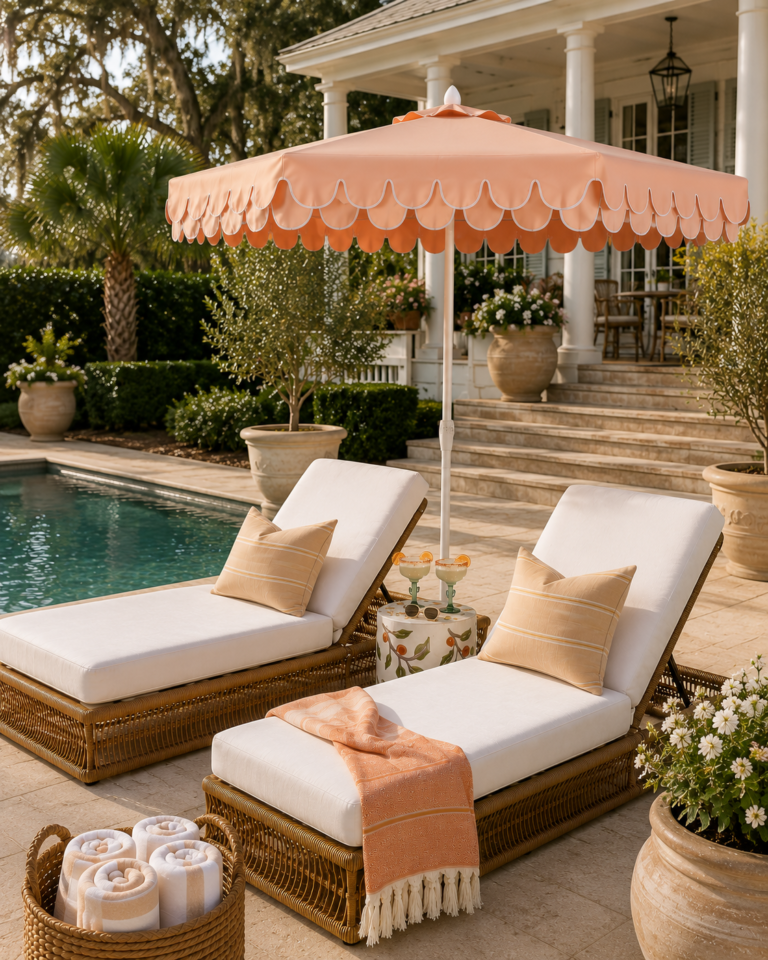
The simplest way to recreate it is through materials. The textures that define a coastal home are the ones that still look like what they came from: linen that wrinkles, rattan and cane, unpainted or reclaimed wood, woven jute, stone, unglazed ceramic. Synthetic, high-gloss, perfectly uniform finishes read as indoor materials; natural, slightly imperfect ones read as outdoor ones, and the eye relaxes around them. The principle is simple: surround yourself with materials that still feel connected to the natural world.
Then add the literal outdoors. Plants are the fastest, cheapest way to soften a room and pull a little of the landscape inside; a single large fern or fiddle-leaf does more for a corner than most furniture. Fresh flowers — even a grocery-store bunch in a plain pitcher — change the entire feeling of a kitchen for a week. And on the days the weather allows, open the windows. No design trick replicates actual moving air and the sound of being connected to outside.
The goal isn’t a beach theme. It’s permeability: a home that feels like it’s in conversation with the world beyond its walls rather than hiding from it.
Create Spaces That Invite Gathering
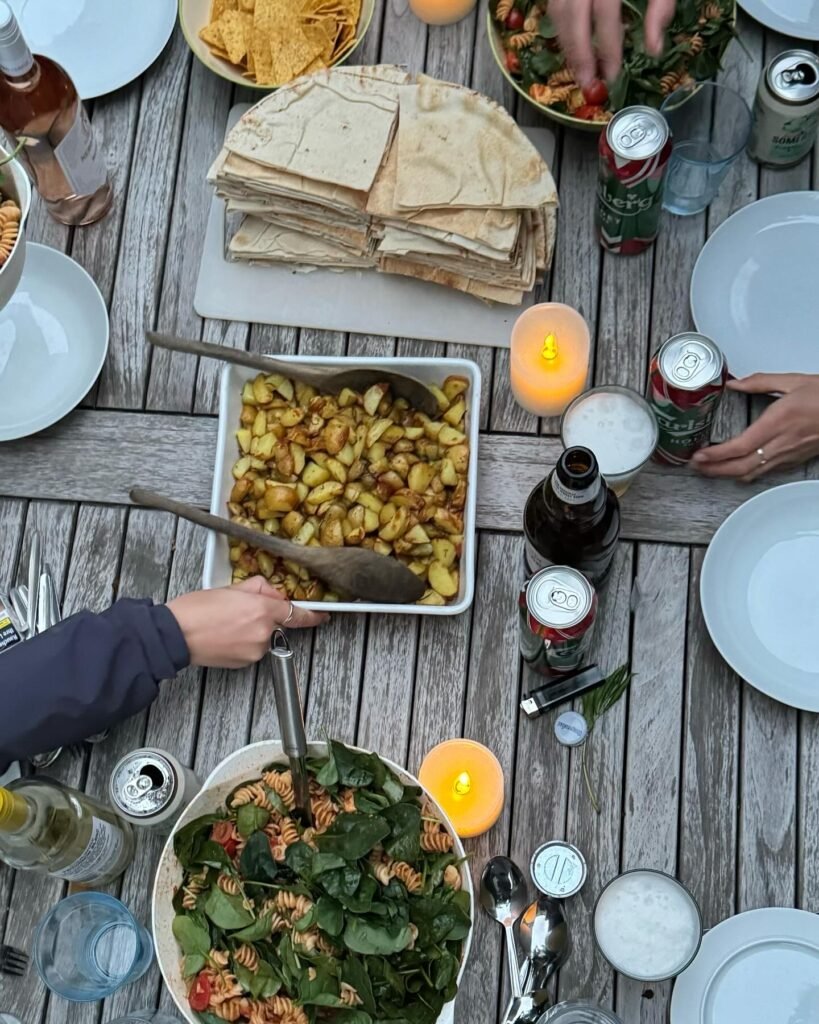
Think back to your favorite moments from any trip to 30A and notice how few of them happened alone, or indoors. The long dinner on the porch. Coffee on the steps before anyone else was up. The kitchen full of people while someone cooked. The best parts of a vacation almost always happen in shared space — and most homes are quietly designed to prevent exactly that.
30A homes are built the opposite way. They orient around gathering: generous dining tables, deep front porches, kitchens you can stand around, seating arranged so people face each other instead of a screen. You can make the same moves at home without renovating anything.
Start with the table. One large enough that lingering feels natural — room for the wine and the dishes and the elbows — does more for a home’s social life than almost any other single piece. Arrange your main seating so it’s actually possible to talk: chairs and sofas turned toward one another, not all aimed at the television. Pull a couple of chairs onto a porch, a stoop, a balcony, a back step — whatever outdoor foothold you have — and you’ll be surprised how often you use it.
Then use the spaces. Eat outside when it’s warm. Cook with people in the kitchen instead of banishing them to another room. Atmosphere isn’t only about objects; it’s about what your rooms quietly encourage you to do. A home arranged for gathering tends to fill with the kind of evenings you’ll later wish you could bottle.
Slow Down Your Weekends
Here’s the part most people skip, and it’s the most important one.
When we try to bring a vacation home, we usually reach for objects — a print, a candle, a throw pillow the color of the water. But the thing you actually miss about 30A isn’t a look. It’s a rhythm. The mornings that started slowly. The afternoons with nothing scheduled. The sense that there was time.
You can’t buy that rhythm. But you can practice it. Don’t recreate the beach — recreate the pace.
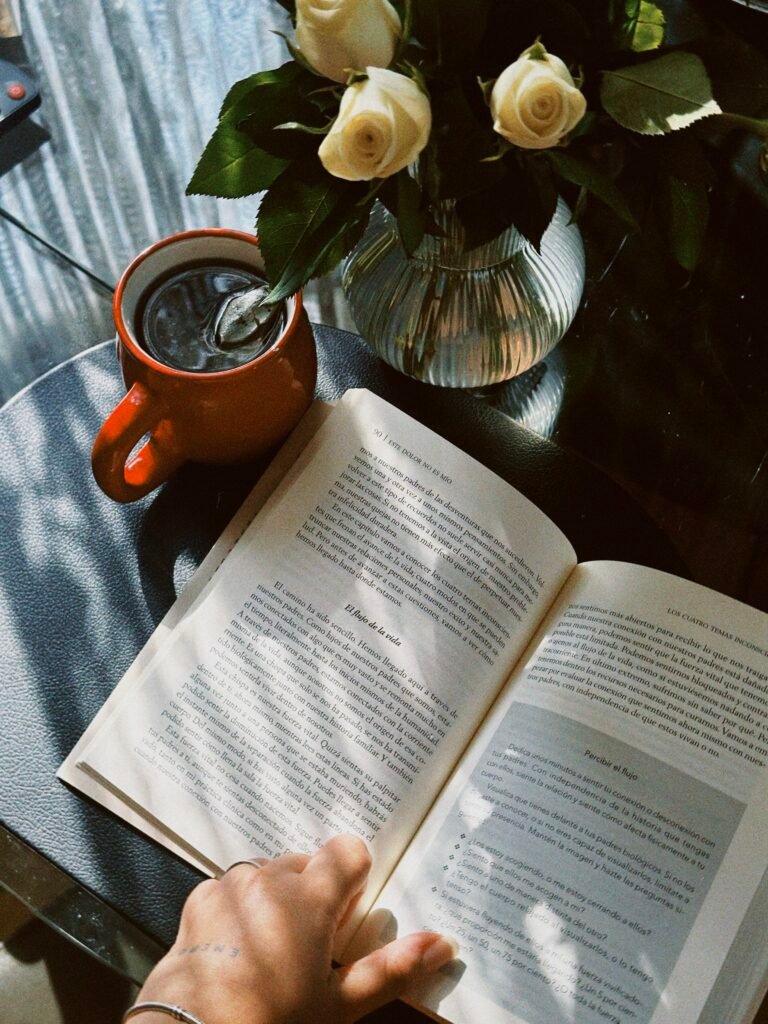
It can be almost embarrassingly simple. Take your Saturday coffee outside and drink it before you touch your phone. Walk somewhere you’d normally drive. Go to the farmers market not for the groceries but for the slowness of it. Read an actual book in the middle of the day without calling it productive. Cook something with someone instead of ordering. Take a walk at sunset for no reason at all. Get on a bike.
None of these require a coastline. What they require is a decision — to stop treating your weekends as a staging ground for the week ahead, and to let some hours stay genuinely open. The feeling you’re chasing was never really about where you were. It was about how you were spending your time. That’s the one part of 30A you can have this Saturday, no plane ticket required.
Need somewhere to start? Here are seven small ways to practice the 30A lifestyle this weekend. Pick one or two — not because they recreate the beach, but because they recreate the pace.
Start This Weekend
✓ Open your windows for an hour.
✓ Eat one meal outside.
✓ Buy fresh flowers.
✓ Walk to coffee instead of driving.
✓ Declutter one surface.
✓ Read outside for thirty minutes.
✓ Watch the sunset.
Choose Quality Over Quantity
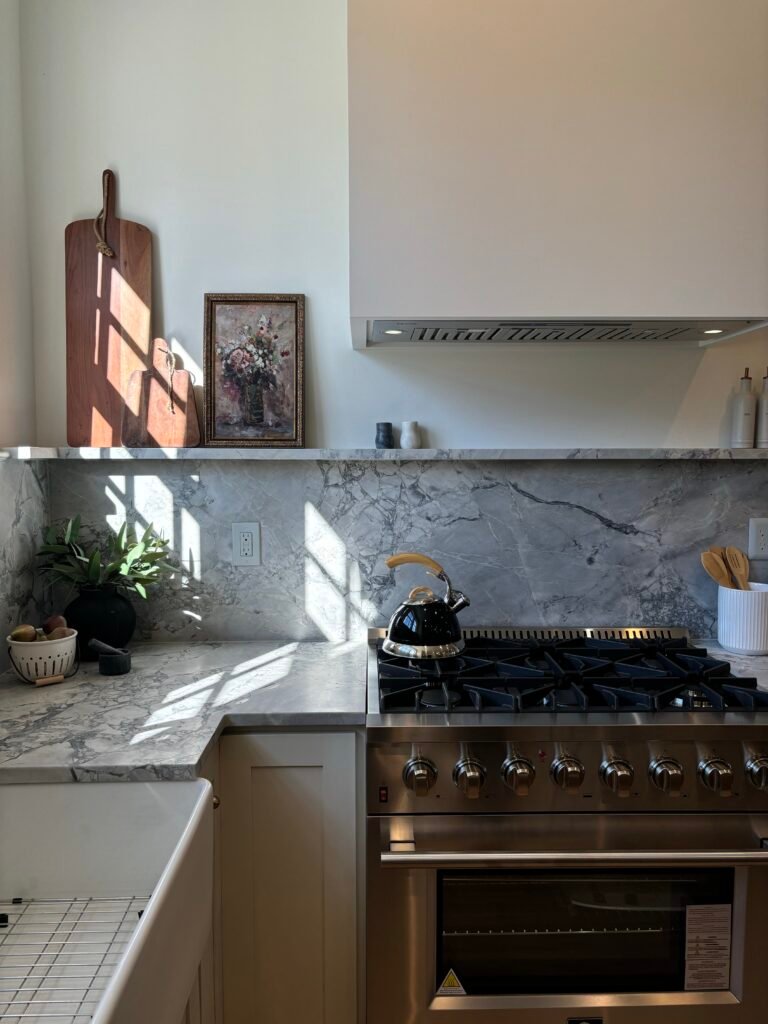
Walk through a beautiful 30A home and you’ll notice what isn’t there as much as what is. The surfaces aren’t crowded. The shelves aren’t stuffed. There’s a confidence in the emptiness — the sense that everything present earned its place.
That restraint is learnable, and it’s the opposite of how most of us accumulate. We buy in volume: the seasonal decor, the impulse finds, the things cheap enough not to think about. The result is rooms that feel busy without feeling intentional.
The 30A instinct is to own less and choose better. A few natural-material pieces — a good wood table, a stone bowl, a linen-upholstered chair — will outlast and outclass a roomful of trend-driven filler. Timeless beats novel. One beautiful object given room to breathe reads as more luxurious than ten competing for the same shelf. It’s quietly the more affordable path over time, too, even when individual pieces cost more: things made of real materials age into character instead of out of style, so you buy them once. The clutter you’re constantly replacing is the expensive habit.
You don’t have to overhaul anything overnight. The next time you’re about to add something to a room, ask whether it’s genuinely better than what’s already there — and if it isn’t, let the space stay open. Restraint, it turns out, is its own kind of decorating.
Let Your Home Tell the Story of Places You Love
There’s a difference between a home that looks like a vacation rental and a home that holds a life, and it comes down to one thing: meaning.
The temptation, when you love a place like 30A, is to fill your home with generic coastal decor — the starfish, the rope, the weathered sign that says BEACH with an arrow. It’s an understandable impulse and almost always a mistake. Themed decor imitates a place; it doesn’t connect you to one. A house decorated entirely in beach motifs feels less like a memory and more like a gift shop.
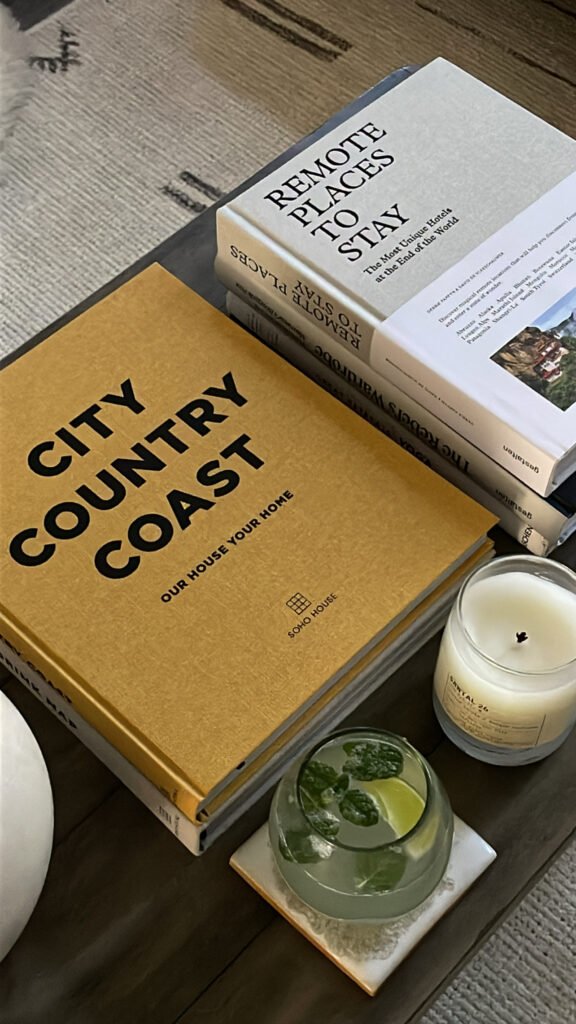
The better approach is to surround yourself with the actual evidence of the places and experiences that have shaped you. Frame your own travel photography instead of buying someone else’s. Display the piece of pottery you carried home in your lap. Keep the books that meant something out where you can see them. Let collected objects — a stone, a small-gallery print, a bowl from a market — quietly mark where you’ve been.
The difference is personal versus generic. Anyone can buy a coastal print; only you have the photo you took at dusk on the day everything felt right. A home built from real memories does something themed decor never can: it reminds you, daily, not of a place you visited but of a person you were there. That’s the part worth bringing home.
The Real Lesson 30A Teaches
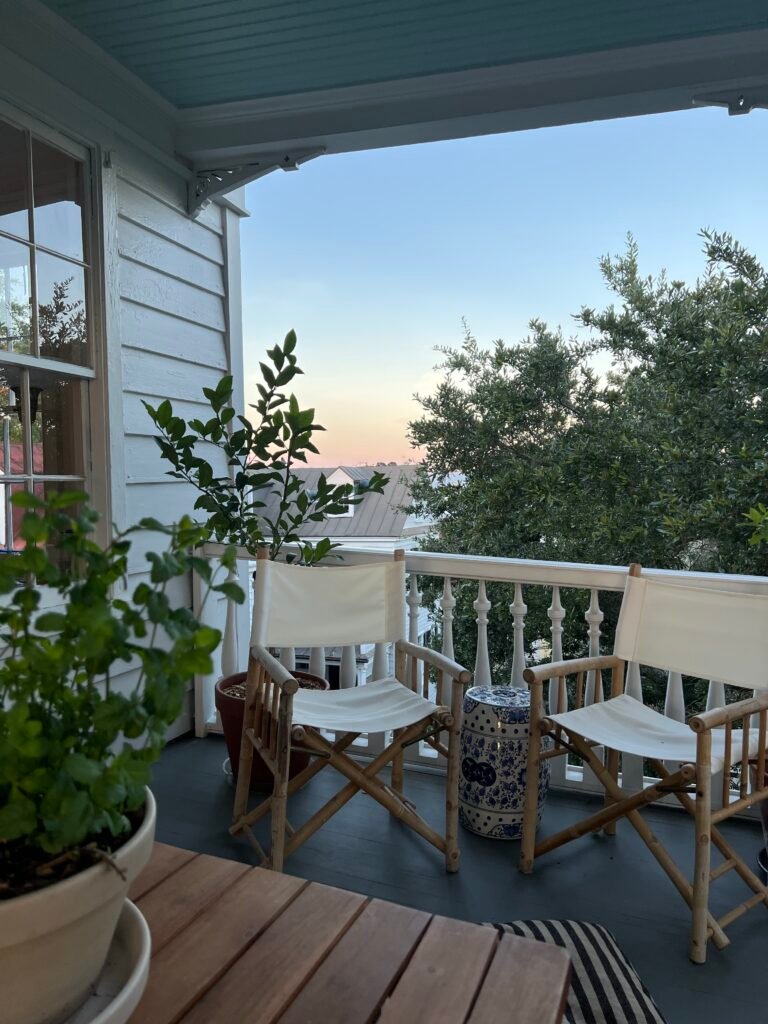
Step back from the paint colors and the porches and the linen, and 30A has one larger thing to teach — the lesson underneath all the others.
None of it happened by accident. The walkable streets, the consistent architecture, the parks and pavilions and town greens, the unhurried feeling that washes over you the moment you arrive: every bit of it was chosen. Someone decided what mattered and built toward it on purpose. The calm you feel there is, in a real sense, designed — that’s the whole premise of New Urbanism, and it’s why we treat the movement as structural to understanding 30A rather than a footnote.
Which means the most important thing you can take home isn’t a material or a method. It’s permission to be that intentional about your own life. Your home, your weekends, your rituals, the rooms your family actually lives in — these aren’t fixed conditions you have to accept. They’re things you get to decide.
That’s a quietly radical idea: that the feeling you traveled hundreds of miles to find is, in its essentials, something you can choose to build where you already are. 30A didn’t get lucky. It got intentional. So can you.
Bringing the Feeling of 30A Home

You may not wake up to the Gulf tomorrow. There may be no sand in your floor mats, no walk to coffee, no green water past the dune line. That’s all right. The view was never really the point.
You can wake up in a home that feels calmer, lighter, and more connected to the life you actually want — designed around daylight and open windows, arranged for long dinners and real conversation, holding the evidence of the places that have moved you. You can let a Saturday stay slow. You can choose less, and better. You can be as intentional about your ordinary life as the planners of 30A were about that thirty-mile stretch of coast.
That’s the real souvenir. Not the memory of somewhere beautiful you went, but the inspiration for how you might choose to live, every ordinary day, right where you are.
If this is the kind of living you’re building toward, subscribe below — one quiet note a week on beautiful places and the everyday life they inspire.
Frequently Asked Questions
What is the “30A aesthetic,” exactly?
It’s less a decorating style than a feeling, built from a handful of consistent choices: abundant natural light, a pale and nature-drawn palette, natural materials over synthetic ones, an easy flow between indoors and out, and a deliberate sense of restraint. The look is the by-product. The intention is the point.
Do I have to live near the beach to get the 30A feeling at home?
No. Almost everything that makes 30A feel restorative — light, materials, gathering spaces, a slower weekend rhythm, and meaningful rather than themed decor — has nothing to do with proximity to water. These are principles you can apply to a city apartment or a mountain cabin just as easily as a coastal cottage.
What’s the most budget-friendly way to start?
Start with the free moves: declutter surfaces, swap heavy curtains for sheers or none, add a mirror across from a window, and turn your seating toward conversation instead of the television. Then add one large plant and a weekly bunch of fresh flowers. None of it requires a renovation, and the change in how a room feels is immediate.
What colors define the 30A look?
Warm whites and soft oats as a base, layered with the muted blues and greens of sea, sky, and dune grass, and grounded by natural wood and stone tones. The palette stays light and low-contrast on purpose — colors that reflect daylight rather than absorb it are a big part of why the rooms feel so calm.
Keep Reading about 30A
- 30A Florida: The Coastal Towns That Feel Like a Permanent Vacation — the full guide to the corridor.
- Rosemary Beach vs. Seaside vs. Alys Beach — how the three flagship towns differ.
- Why 30A Has Become One of America’s Most Coveted Beach Destinations — the forces behind its pull.
- What Makes 30A Beach Houses Feel So Different — the design language, decoded.
Coming soon to the publication:
- How to Create a Sense of Place at Home
- Coastal Design Elements Worth Copying
- Why Environment Shapes Happiness
- How to Make Your Home Feel Like Somewhere You’d Book for a Week
- The Psychology of Beautiful Spaces