Why 30A Florida Has Become One of America’s Most Coveted Beach Destinations
Why is 30A Florida so popular? The answer goes far beyond beautiful beaches.
America has no shortage of coastline. Tens of thousands of miles of it, lined with beach towns that mostly blur together — the same condo towers, the same airbrushed T-shirt shops, the same four lanes of traffic between you and the water.
Then there is 30A.
Twenty-four miles of two-lane road along Florida’s Emerald Coast, and somehow it has become a quiet obsession. Architects study it. Designers borrow from it. Families book the same week every summer for a decade. Second-home buyers spend millions to own a piece of it. People who visited once spend years trying to explain the feeling to friends who weren’t there.
It would be easy to credit the water, and the water is genuinely extraordinary. But plenty of places have beautiful water. What sets 30A apart isn’t a single beach. It’s the combination: deliberate town planning, walkable communities, distinctive architecture, fiercely protected nature, and a pace that feels like a standing argument against the way most of us live the other fifty weeks of the year.
This is the story of how a stretch of scrub-oak coastline almost nobody wanted became one of the most coveted addresses in the country — and why it tends to stay with you long after you’ve driven home.
What Is 30A Florida?
Start with the literal answer: 30A is a road. Officially County Road 30A, it runs along the Gulf of Mexico in South Walton County, on Florida’s northwest coast — the stretch known as the Emerald Coast. It sits between Destin to the west and Panama City Beach to the east, but it feels nothing like either of them.
The more useful answer is that 30A isn’t a town at all. It’s a string of more than a dozen distinct beach communities, each with its own architecture, its own personality, and its own reason for existing. Driving the corridor end to end takes less than an hour, but it passes through a remarkable range of places.
The names most people come to know:
- Rosemary Beach
- Alys Beach
- Seaside
- WaterColor
- Seagrove Beach
- Blue Mountain Beach
- Grayton Beach
- Inlet Beach
Between and around them are smaller enclaves, state parks, and one of the area’s most unusual natural features: a chain of coastal dune lakes that meet the Gulf only a few steps from the sand. We’ll come back to those.
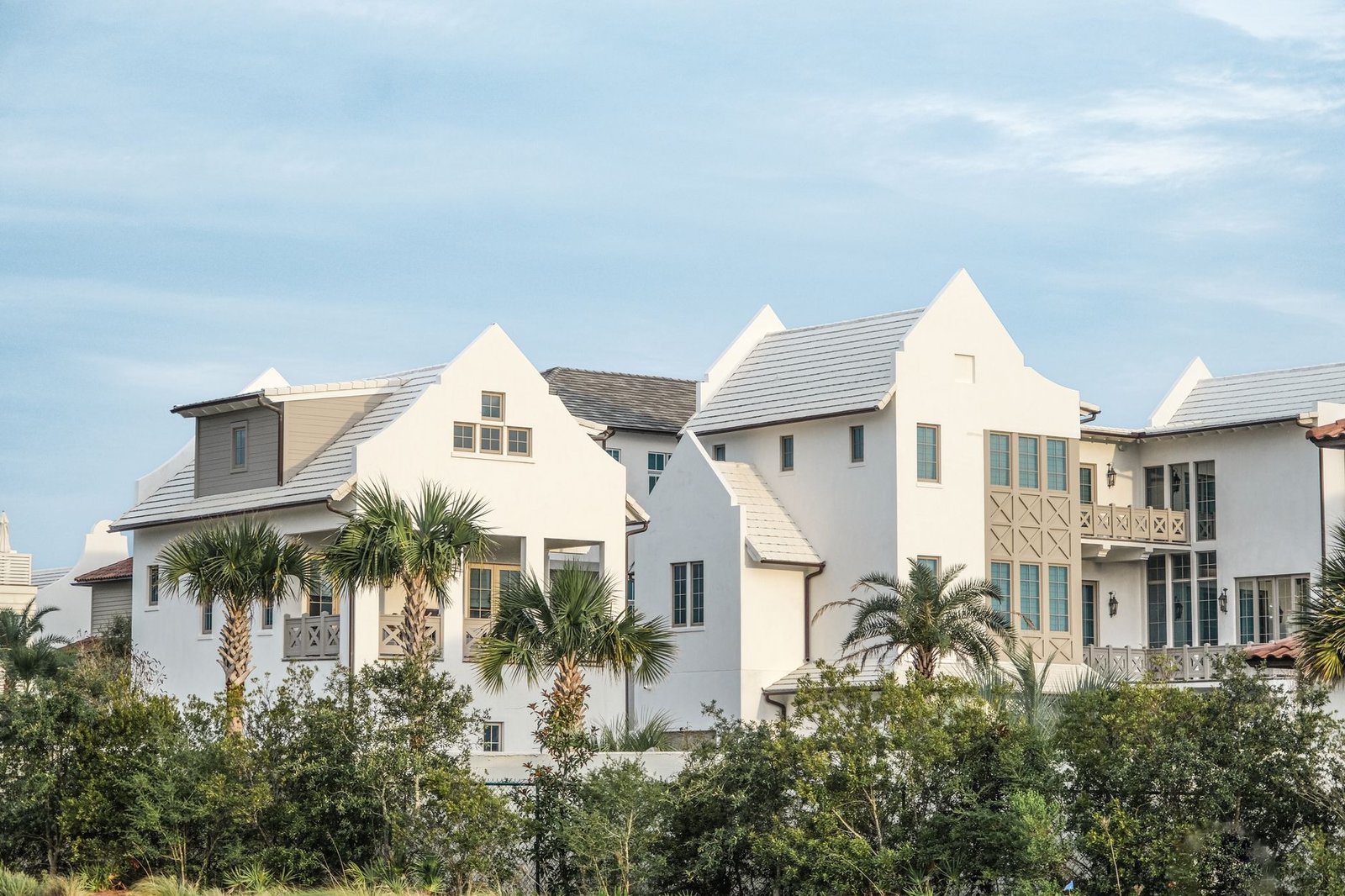
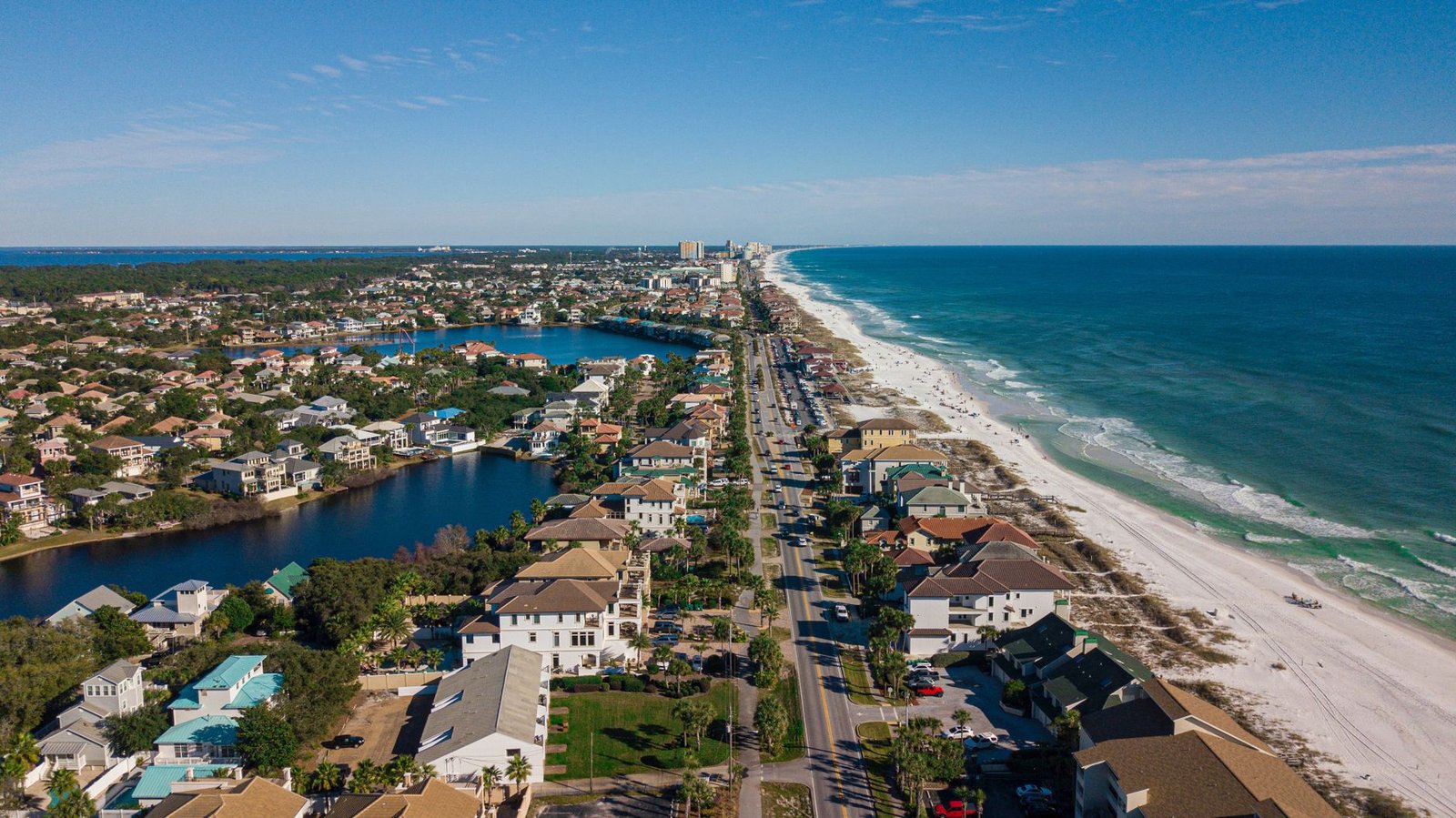
Part of what gives the corridor its character is what you won’t find here. There are no high-rises. Buildings stay low, rarely rising above the dunes and the tree line, so the horizon belongs to the water rather than to towers. The scale stays human — low-slung, close-knit, walkable — and that single choice separates 30A from almost every other developed beach in Florida.
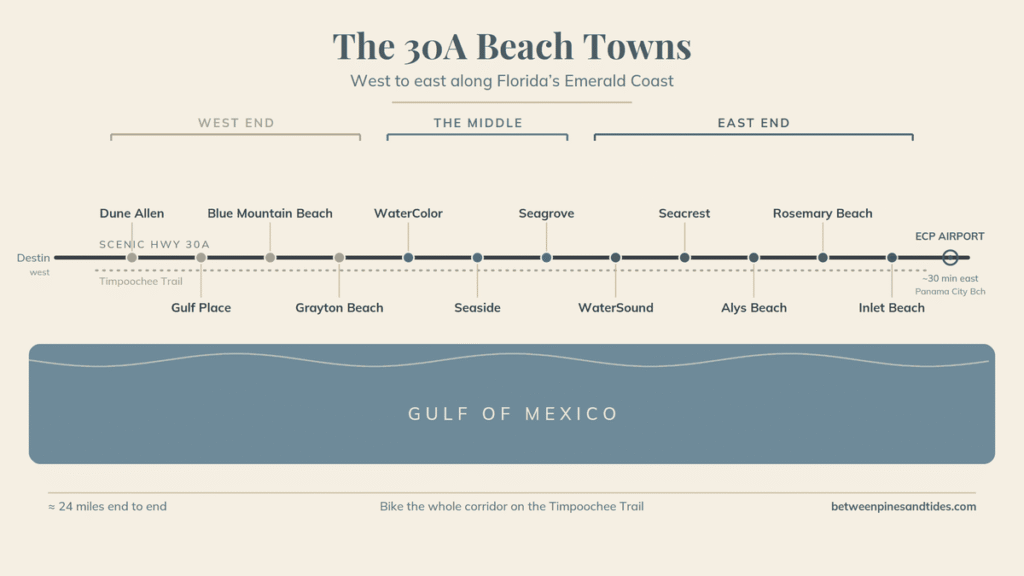
Keep reading: 30A Florida: The Coastal Towns That Feel Like a Permanent Vacation
It Was Designed Differently — On Purpose
Here is the part most visitors never learn, and it explains almost everything else: 30A is the birthplace of a town-planning movement that went on to reshape how communities are built around the world.
In 1978, a developer named Robert Davis inherited eighty acres of beachfront from his grandfather. At the time, practically no one wanted to live there. The story goes that Davis stood on the side of the road handing out lemonade to anyone who would pull over and listen to his idea. That idea became Seaside, built beginning in the early 1980s with architects Andrés Duany and Elizabeth Plater-Zyberk.
Seaside was conceived as a reaction against the anonymous suburban subdivision — the cul-de-sac, the two-car garage, the sense that you had to drive to reach anything worth reaching. Davis and his architects wanted a walkable, human-scaled town: narrow gridded streets, front porches close enough for neighbors to talk across, a real town center, and homes you could leave on foot to reach the market, the cafe, the beach, the school.
That philosophy became known as New Urbanism, and Seaside is widely considered its first and most influential example. Time magazine called it the most astonishing design achievement of its era. Its principles have since shaped more than six hundred new towns and neighborhoods around the world, from Disney’s town of Celebration to walkable developments across America.
More than a hundred and fifty architects eventually contributed designs to Seaside, which is why no two homes look quite alike and yet the whole town still hangs together. The variety was the point. So was the restraint that kept it from becoming chaos.
People come for the place. What keeps them is the feeling that someone thought about how life would actually be lived here.
Because Seaside was privately owned, the developers could write their own zoning rules — a form-based code that prioritized how buildings met the street over the usual separation of uses. That freedom is why the town looks and feels so cohesive, and why it could become a model rather than a compromise.
It’s worth sitting with how unlikely all of this was. A man stood on an empty road handing out lemonade to sell a vision almost no one shared, and four decades later that vision is taught in architecture schools and copied on three continents.
30A didn’t stumble into being beautiful. It was argued into existence.
The two communities that now anchor the eastern end of 30A, Rosemary Beach and Alys Beach, grew from the same design lineage and the same architects. That shared DNA is the reason the whole corridor feels intentional instead of accidental — human-scaled instead of resort-scaled. You don’t notice the planning so much as feel its absence everywhere else.
Every Community Has Its Own Personality
Spend a few days here and you stop thinking of 30A as one destination. Each community has a distinct character, and choosing between them is half the fun of planning a trip.
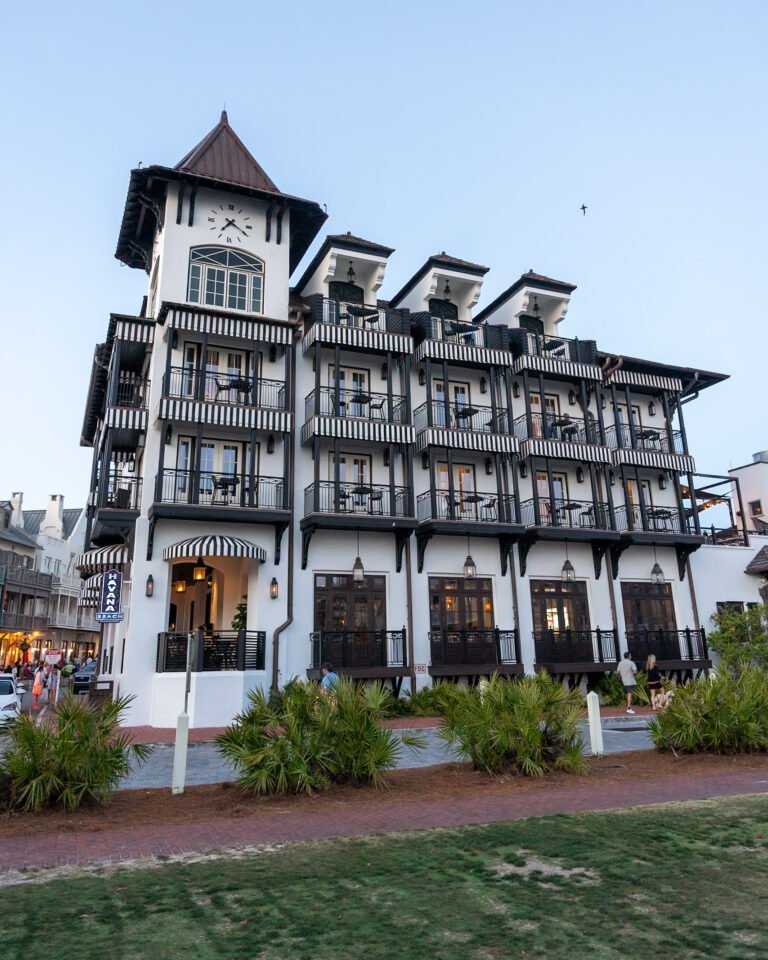
Rosemary Beach. European-inspired and a little moody. Deep porches, brick footpaths, hidden courtyards, and a darker, richer palette than its neighbors. It feels like a small old-world village that happens to sit on the Gulf.
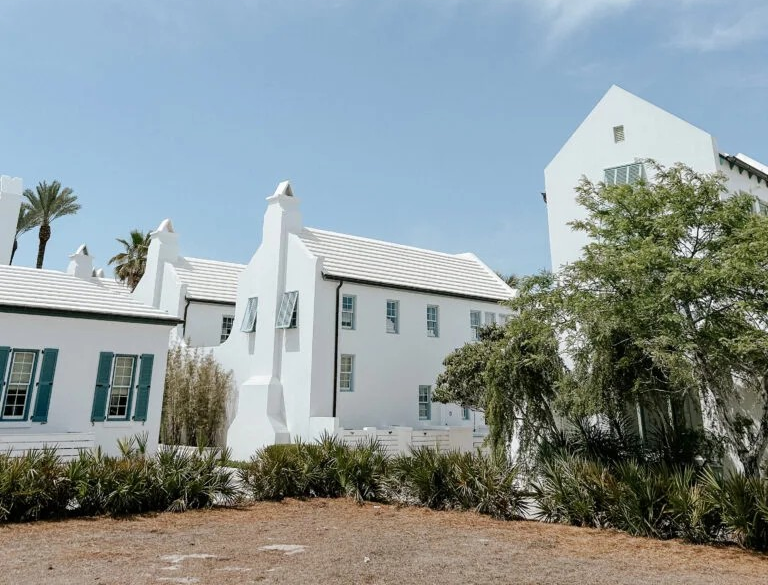
Alys Beach. Stark, white, and unmistakable. Bermuda- and Antiguan-influenced architecture — whitewashed walls, private courtyards, clean geometry. It is the most photographed and the most exclusive stretch of the corridor.
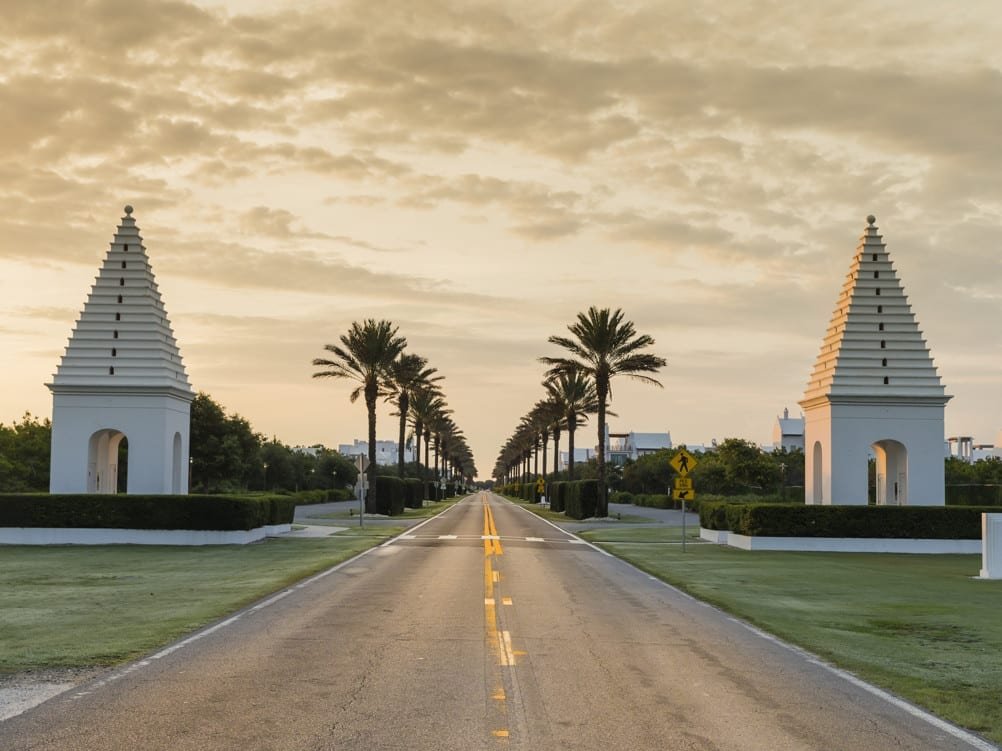
Photo Credit: Alys Beach
Seaside. The original. Pastel cottages with tin roofs and picket fences arranged around a walkable town center. If it looks like a movie set, that’s because it was one: Seaside played the too-perfect town in The Truman Show.
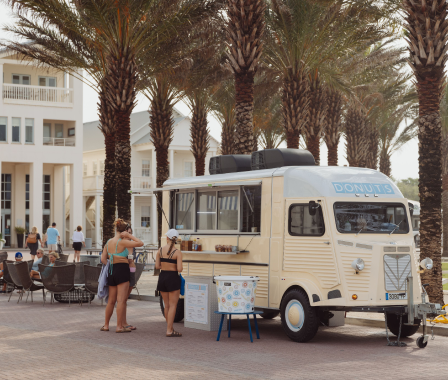
Photo Credit: SeasideFL
WaterColor. Relaxed and family-oriented, built around a lake and a network of trails. Less about being seen, more about settling in for a week with kids and bikes.
Grayton Beach. The oldest and most eclectic of them all, with an unpolished, artsy, local feel. Its unofficial motto — “Nice Dogs, Strange People” — tells you most of what you need to know.
Seagrove Beach. Classic Old Florida. Leafy, low-key, and a little timeless, with a strong sense of having been here before the corridor became famous.
And those are only the best known. Smaller pockets — WaterSound, Dune Allen, Inlet Beach at the eastern tip — round out the corridor, each with its own following. Half the pleasure of 30A is discovering which one feels like yours.
Choose your town: Rosemary Beach vs Seaside vs Alys Beach: Which 30A Town Fits Your Vacation Style?
The Beaches Are Among the Most Beautiful in America
All of the planning in the world wouldn’t matter if the coastline weren’t worth protecting. It is.
The water along 30A reads green rather than blue — the famous “emerald” color that gives the Emerald Coast its name. The effect comes from clear, shallow Gulf water passing over a brilliant white sea floor, which throws the light back as a soft, almost tropical green.
That sand is its own story. It’s pure quartz, carried down from the Appalachian Mountains over thousands of years and ground fine and white. It stays cool underfoot in the summer heat and squeaks when you walk on it. Once you’ve felt it, ordinary beach sand never feels quite the same.
Then there are the coastal dune lakes — one of the rarest features on 30A and one of the least understood. These are shallow freshwater lakes that sit just behind the dunes and occasionally break through to the Gulf, mixing fresh and salt water in a way found in only a handful of places on earth. South Walton has roughly fifteen of them, and they’re a large part of why the landscape here feels different from a typical beach town.
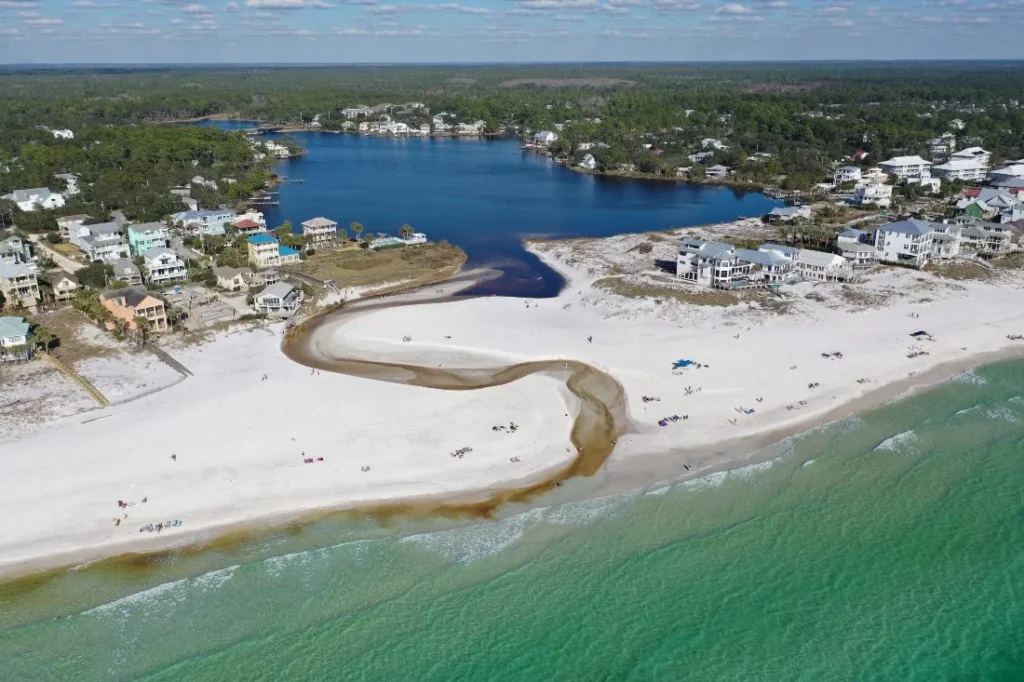
Photo Credit: 30A.com
DID YOU KNOW?
South Walton is home to around fifteen coastal dune lakes — one of the rarest natural ecosystems on earth, found in only a few places worldwide, including New Zealand, Australia, Madagascar, and this stretch of the Florida Gulf Coast.
Much of the coastline is protected, which is the quiet reason it has stayed beautiful. Grayton Beach State Park has been ranked among the best beaches in the country, and Deer Lake State Park preserves a stretch of dunes and dune lake that looks much as it would have a century ago. Protected land doesn’t just preserve the view — it caps how much can ever be built, which shapes everything from the skyline to the price of a house.
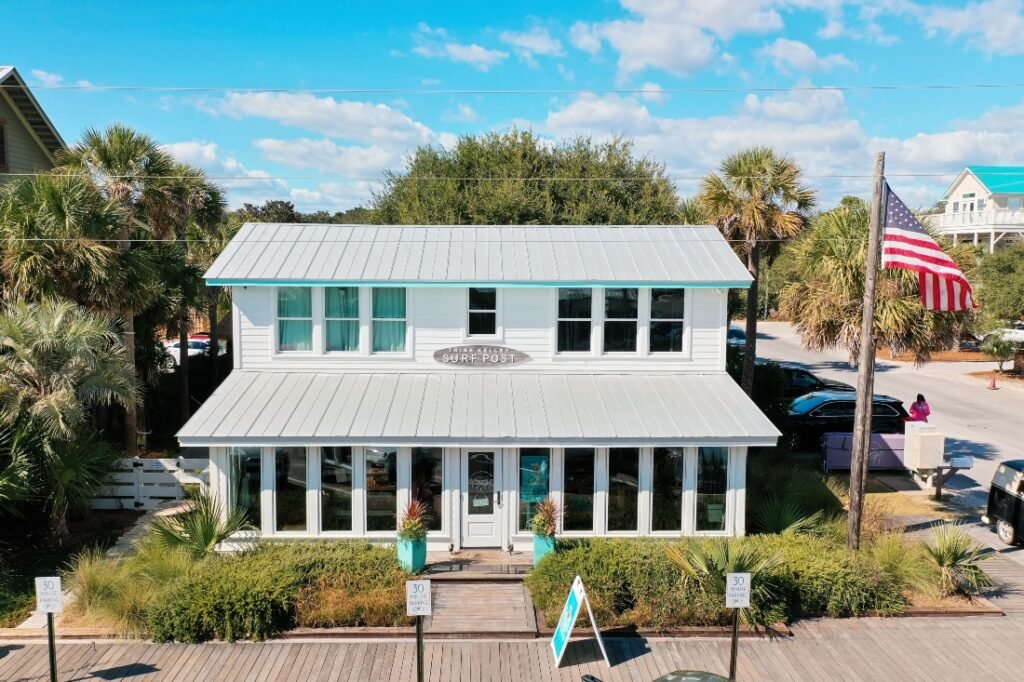
A surprising amount of South Walton sits in conservation land and state park — forest, wetland, and dune that will never be developed. That protection does quiet work in the background. It keeps the corridor from filling in, preserves the dune lakes and the wildlife that depend on them, and ensures the view from the sand looks much the same decade after decade. The beauty here isn’t only luck. It’s policy.
Architecture Plays a Bigger Role Than You’d Think
Most beach towns grow by accretion: a condo here, a strip mall there, whatever the market builds and the code allows. 30A grew the opposite way — under design standards strict enough that the result feels composed.
Communities along the corridor are governed by architectural review and detailed design codes that dictate materials, proportions, rooflines, and color. The effect is subtle but constant. Parking is tucked behind buildings or screened from view. Utilities are buried. Signage is restrained. Landscaping is considered. There is almost no visual clutter — no tangle of wires, no competing billboards, no asphalt seas.
What you’re left with is a streetscape that feels calm in a way that’s hard to name until you notice what’s missing. The buildings talk to each other. The palette holds together. Even the newest homes are built to feel like they belong. It’s the kind of cohesion you usually only find in towns that took a century to grow — except here it was designed in from the start.
The codes do something else worth noticing: they slow building down. New homes pass through architectural review before they go up, so the corridor grows carefully rather than all at once. That patience is a large part of why the place still feels considered rather than overdeveloped, even as demand has climbed year after year.
That deliberate quality is exactly why 30A homes have become a reference point for designers and homeowners far beyond Florida — a subject worth a piece of its own. (More on that in an upcoming piece: What Makes 30A Beach Houses Feel So Different.)
The Pace of Life Feels Different
Ask people what they actually remember about 30A and they rarely lead with the architecture. They describe a rhythm.
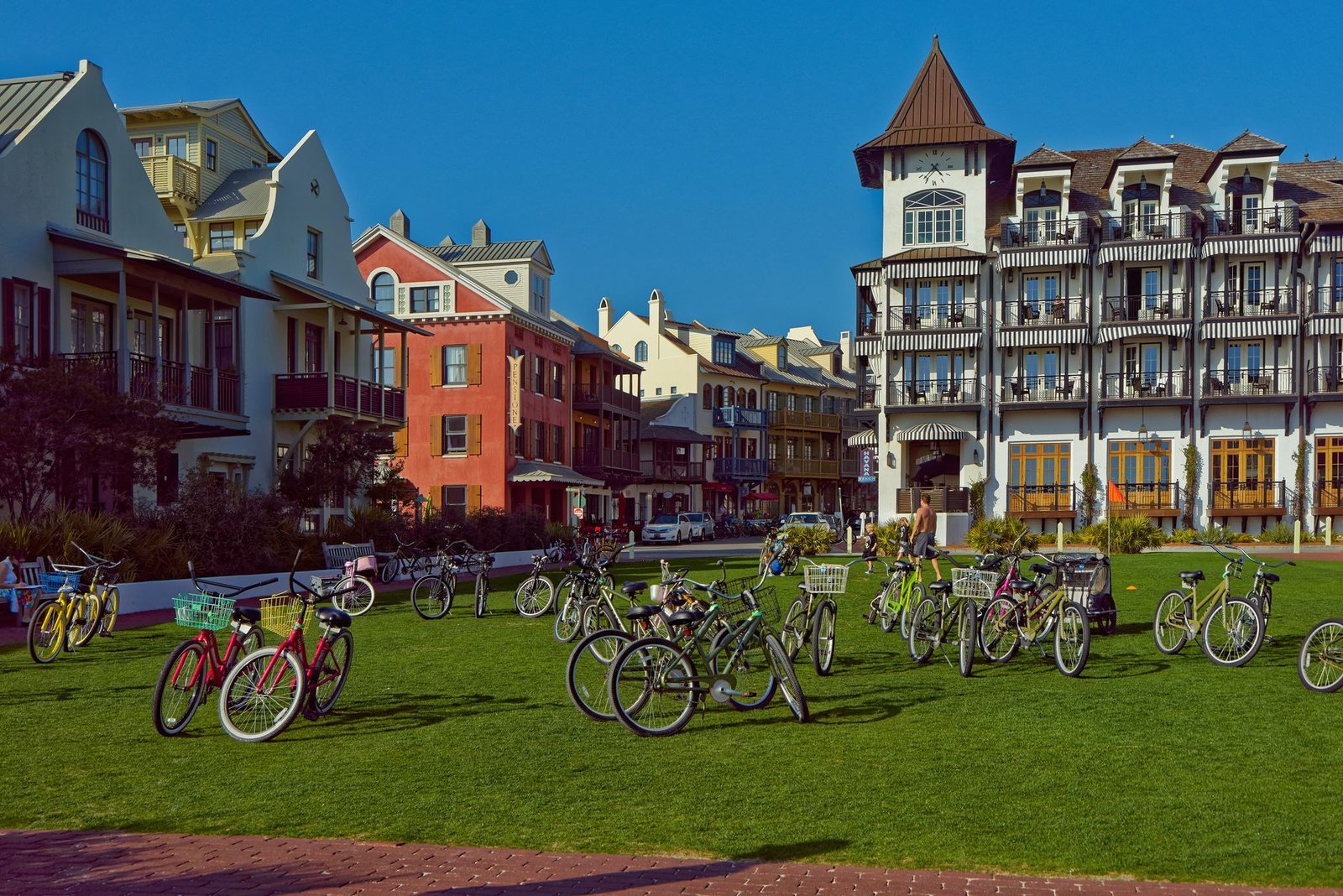
Mornings start with a walk or a bike ride to coffee, because everything is close enough to reach without a car. Bikes outnumber traffic. Afternoons stretch out on the sand or the porch. Dinners happen outdoors, and they’re unhurried. Evenings end with people drifting toward the Gulf to watch the sun go down, which somehow never stops feeling like an event worth pausing for.
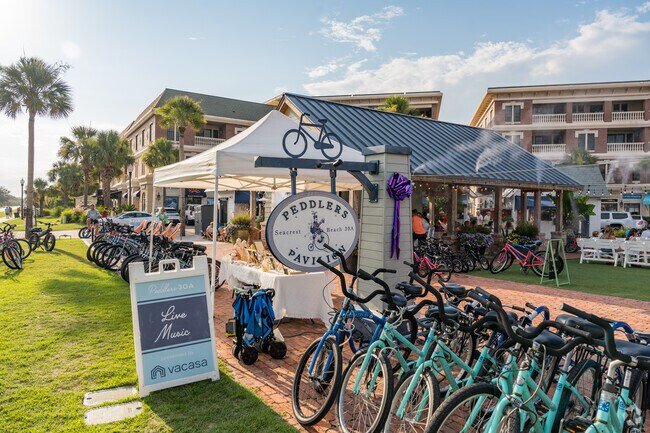
Photo Credit: Homes.com
There are farmers markets and outdoor concerts and small community traditions that repeat season after season. There is, conspicuously, less rushing. The whole place seems designed to encourage lingering — and after a day or two, you find yourself doing it without trying.
This is the part that tends to follow people home. Not the specific restaurants or the rental house, but the question underneath them: what would it take to live a little more like this all the time?
None of it happens by accident either. A town built for walking produces walkers. Streets sized for people instead of cars fill with people. The same planning decisions that make 30A photograph well are the ones that change how a week here actually feels — looser, quieter, more present. The design and the mood turn out to be the same thing seen from two angles.
It’s Equally Appealing for Families, Couples, and Design Lovers
Part of what makes 30A so durable is that it works for very different kinds of travelers at once.
Families. The walkability is the whole game. Kids can bike to the pool or the beach without crossing four lanes of traffic, the communities feel safe and self-contained, and beach access is rarely more than a short stroll. It’s a place where parents can exhale.
Couples. The slower stretches — a quiet morning, a long dinner, a sunset with no agenda — make it an easy place to reconnect. The dining is genuinely good, and you can have a beautiful few days without ever getting in the car.
Design lovers. For anyone who cares about architecture, light, and beautiful spaces, 30A is something close to a pilgrimage. The boutiques, the streetscapes, the way the towns photograph — it rewards paying attention, and it sends most visitors home with a camera roll full of ideas.
Second-home owners. For many, a visit turns into a longer plan. The combination of lifestyle and lasting demand makes 30A one of the most sought-after second-home markets in the Southeast — a place people buy into as much for the way of life as for the investment.
What’s unusual is how rarely those groups get in each other’s way. A single morning can hold a family on bikes, a couple lingering over coffee, and a designer photographing a doorway, and none of them feels out of place. A town built around walking and beauty turns out to suit almost anyone who values either.
Is 30A Florida Worth Visiting?
For the right traveler, 30A is hard to beat. If you’re drawn to natural beauty, thoughtful design, walkable towns, good food, and a calmer pace, it delivers all of it in one twenty-four-mile stretch — and it tends to earn repeat visits rather than one-and-done trips.
It’s worth being honest about who might want something else. 30A is intentionally not a high-rise, big-resort, theme-park kind of place. You won’t find nightlife districts, casinos, or sprawling waterpark resorts. If that energy is what you picture when you imagine a beach vacation, Panama City Beach sits right next door and offers exactly that.
But if your idea of a good trip is a slower one — mornings on a bike, afternoons on white sand, evenings outdoors, and surroundings that are genuinely beautiful to be in — 30A is one of the best places in the country to find it.
Frequently Asked Questions
What is so special about 30A Florida?
It’s the combination, not any single thing: emerald water and white quartz sand, more than a dozen distinct planned communities, the architecture and walkability that came out of the New Urbanism movement Seaside helped launch, rare coastal dune lakes, protected state parks, and a slower, more intentional pace than most beach destinations.
Is 30A expensive?
It can be, especially to own. 30A is a luxury coastal market well above Florida’s statewide averages. As of early 2026, Walton County’s median sale price was roughly $748,000, the 30A corridor’s median sat near $1.55 million, and the most exclusive enclave, Alys Beach, averaged around $5.5 million — with a record sale near $28 million in 2026. Visiting is more flexible: rental prices swing widely by season and community, and the shoulder months are far gentler on the budget than peak summer. Treat these figures as a snapshot.
Which town is best?
There’s no single best — it depends on what you want. Rosemary Beach for old-world atmosphere, Alys Beach for striking design and exclusivity, Seaside for the classic walkable town center, WaterColor for relaxed family trips, Grayton Beach for local character, Seagrove for Old Florida calm. Our town-by-town comparison breaks it down in detail.
Is 30A better than Destin?
They’re different trips, not better or worse. Destin is larger and more developed — high-rise condos, big resorts, outlet shopping, busy nightlife, and one of the country’s best-known charter fishing scenes. 30A is quieter, low-rise, design-led, and built for walking and biking. If you want energy, convenience, and plenty to do off the beach, Destin delivers. If you want calm, beauty, and a slower pace, 30A is the one that tends to win people over — and the two sit close enough together that some travelers split their time between both.
When is the best time to visit?
Late spring and early fall hit the sweet spot: warm water, fewer crowds, and lower rates than the July peak. Summer is busiest and most expensive. Winter is quiet and mild, better for a peaceful getaway than for swimming.
How many days do you need?
Three to four days is enough to settle into one community and explore a couple of others. A full week is ideal if you want to slow down, which is rather the point of coming here in the first place.
Can you bike the whole area?
Yes — and you should. A paved multi-use path runs much of the length of 30A, and biking is one of the best ways to experience it. Many visitors barely touch their cars once they arrive.
NEWSLETTER SIGNUP — join the list for future 30A and second-home guides.
The Real Reason It Stays With You
The appeal of 30A isn’t just its beaches. It’s the way thoughtful design, slower rhythms, and beautiful surroundings shape the experience of everyday life. Long after visitors leave, many find themselves trying to recreate small pieces of that feeling at home — walking more, spending evenings outdoors, designing spaces that encourage connection.
That’s what makes 30A memorable. It offers a glimpse of a lifestyle that feels both inspiring and attainable — not a place you escape to once a year, but a way of living you can borrow from and bring back with you.
Keep exploring 30A
- Guide: 30A Florida: The Coastal Towns That Feel Like a Permanent Vacation
- Compare: Rosemary Beach vs Seaside vs Alys Beach
- What Makes 30A Beach Houses Feel So Different (coming soon)
- How to Bring the Feeling of 30A Home (coming soon)
One Comment